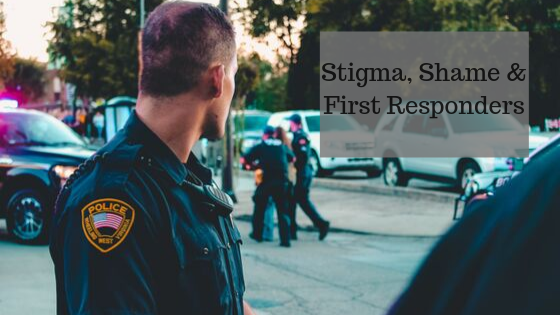
Stigma, Shame & First Responders

My mental health and legislative worlds frequently come together, but an article and what happened yesterday really made me blink.

First, the good news. At a hearing yesterday, the Pennsylvania House Veterans Affairs & Emergency Preparedness committee moved a bill of mine. HB1459 would give first responders more mental health resources. It would require trauma and mental health training, create a peer to peer mentorship program and mandate the creation of a toll-free hotline for first responders who are struggling with mental health issues.

I feel like legislation like this is more important then ever. Why? Stories like this, which report on the NYPD’s ongoing mental health and suicide crisis, and the unwillingness of some police officers to seek mental health help, despite the fact that they feel the need to do so:

In a new report, the Department of Investigation’s Office of the Inspector General surveyed officers who retired in 2016 and found that 25 percent of them reported going through a period of emotional stress, trauma or substance abuse that caused them to consider getting professional help.

But more than a third of those officers did not end up seeking assistance, according to the report.

Half of them expressed fear that the department would find out about their decision to seek support.

So, what do we do here?

First, there are internal things that I think the NYPD can do. Chief among them? Work to change the culture and attack stigma by sharing stories of successful police officers who have experienced mental illness, sought help, and thrived.

Furthermore, the NYPD must do whatever it can to stress the confidential nature of their programs. According to the report, 50% of people surveyed were worried about the department finding out about their illnesses, 45% of negative labels, and 39% afraid of being put on a modified assignment. As the NYPD notes, an “extremely small number” of officers do wind up having their weapons taken away, but they are given those back upon successful treatment. Treatment is confidential, except in cases where the officer in question may present a danger to themselves or others.

The second is broader: We need cultural change at a society wide level. When we discuss the importance of stigma when it comes to mental health, this is why. Stigma is more than just how people look at the mental ill, its how we look at mental illness within ourselves. Clearly, as cases like this demonstrate, a culture of machismo and an overabundance of self-reliance can kill. For reasons like this, we clearly must do a better job of reminding people that there is no shame in seeking help, and that in many cases, its the only way to lead a happy, healthy and productive life.

How To Support A Friend Who Lost Someone To Suicide

It goes without saying that when someone you care about loses a person they love to suicide, you want to do everything you can to support that person. That being said, survivors of suicide loss endure an array of emotions: Guilt and loss, fear and anger, confusion and resentment.

During that experience, you want to do whatever is necessary to help your friend through their trauma. But you want to do so in a way which is most supportive of them and respects their complex emotional needs.

That’s a tough balancing act. On one hand, you want to be there for them – checking in on them, calling/texting, asking if they need anything. On the other the loss can be exceptionally painful, and you want to respect the other person’s space while still making sure they know you’re there.

Walking that line can be difficult. Here are some tips on how to do it.

1) Have realistic expectations: Your friend is undergoing the worst trauma and pain of their life. You cannot make it all better. All you can do is be supportive and caring. Make sure you remember that in all of your interactions with your friend. When my friend lost her husband, I gave myself two goals: Be there for her, and make her laugh with the occasional terrible joke. If you can make a wounded person smile, even for a moment, you’ve done a good deed.

2) Check for professional advice: The American Foundation for Suicide Prevention has a great blog entry on how you can support someone who suffers a suicide loss, and their tips are extremely valuable. Among their advice: Be patient, don’t attempt to empathize (unless you’ve been through a suicide) and read up on suicide loss. Alternatively, if you have access to one, check with a therapist or other professional to get guidance about how to best approach the situation.

3) Follow their lead: The “how” of talking to someone who lost someone to suicide can be difficult. Follow their lead. If they look like they are looking for humor, engage. If they don’t want to talk, but appreciate your calls, tell them about your day. If they are too depressed to move, wrap an arm around them, bake them a cake and watch TV with them. Take your lead from the person in question and understand how emotionally volatile of a time it is for them.

4) Be explicit with your friend: “I will text you every day to say hello, see how you are doing, and ask if you need anything. If you want me to stop, say the word and I will.” Tell your friend anything and everything you are prepared to do. Be specific: Offer to cook meals or do the laundry. Just make sure the person knows you are there. Even if they don’t seem like they appreciate it, I bet they do.

5) Don’t ask questions: “How did they die? Was it suicide? Were they depressed?” It’s a human impulse, but the answer is absolutely, positively none of your damn business, unless your friend decides to tell you what’s happening. Then, and only then, is it appropriate to ask questions, and even then, use restraint and caution. Remember, your goal is to alleviate your friend’s pain, not get your own curiosity satisfied.

6) Don’t spread rumors: Shut. Up. Keep what you learn in confidence. Don’t discuss anything you haven’t been specifically cleared to discuss. In some cases, your friend may want other people to know. In others, they may desire privacy. Whatever your friend wants, respect it. Remember, it’s not your story to tell.

7) Check with people closer: If you’re confused about how to behave – should you call/text, do they want flowers, should you cook a meal, etc – check in with someone closer. There may be closer friends or family in a less emotionally fragile state, and if that’s the case, you can get some additional guidance. When my friend lost her husband, I texted her best friend to ask if it was alright for me to be regularly texting and checking in. The friend confirmed, and I continued.

8) Don’t stop when the immediate crisis is over: In the immediate aftermath of a suicide, the world swarms. Then the funeral happens, and too many people forget. Don’t be that person. The wounds will last a lifetime – don’t let go of your friend. Don’t stop checking in. The pain will remain – make sure your support does as well.

For those of you with additional experience in this realm, I really welcome your feedback for all of us. If you’ve endured such a loss, what did your friends do right? What did they do wrong? What did you want the world to know that they didn’t?

Thanks for reading. I hope if was helpful.

More Than Stigma: Shifting the Nature of the Conversation Around Mental Health and Suicide

Advocates for suicide prevention and mental health often talk broadly about “the stigma” which surrounds mental illness and suicide. Many of us – myself included – believe that if we can just get more people talking and thinking of mental illness, if we can have people discussing their issues with depression, anxiety, addiction and more without shame or fear, we can help to put an end to this epidemic. I firmly believe that this is the case.

I also know its not enough.

And that’s where the conversation around public policy, resources and taxation has to come into pay.

I happened to catch a fascinating column on mental health the other day – I obviously can’t find it now, that would be too easy, but the column made a great broad point: Ending mental health stigma is like cutting holes in a wall, but then there’s nowhere to go because our system of mental healthcare is so broken in this country.

Many of us concentrate our efforts on stigma for a couple of reasons. I think it’s one of the most important things that we can do. But let me expand on the second part of that sentence: That we can do. People do need to know it is okay to seek help and to treat themselves. They need to know that these issues are real, powerful and can kill you. But, as any studies have shown, individual conversations are the best way to break mental health stigma. A face to face talk can make a huge difference in that area. That means that, without question, the most important person to ending mental health stigma is you.

Second, it’s the easiest.

Making society-wide change is really hard, of course. Particularly in areas where colossal interest groups are at play. I’m an elected official – theoretically one of the people who makes state-wide decisions in Pennsylvania – and I fully understand just how difficult this can be.

And the simple truth is that we must make systemic changes to help reduce rates of mental illness and suicide.

From a mental health and suicide perspective, there’s an awful lot that needs to be done. This includes increasing access to mental health care, increasing the number of mental health care practitioners and addressing the mental health care practitioner shortage, reducing costs, enforcing parity in insurance care, reducing access to deadly means of suicide and more. And that’s to say nothing about the major societal problems that we face which contribute to mental illness and suicide, including improving housing options, strengthening the social safety net, increasing the minimum wage, making housing more affordable, etc.

Many of us tackle stigma because we can’t get at these issues. And stigma is something we can control.

So, what does that mean? Should you stop talking about mental health stigma? Hell no. Of course it’s vitally important, but it’s important in more ways than you think, because the more you discuss mental health, the more pressure you can bring on policy makers to address the fundamental inequities and gaps in our system which allow for mental illness to run so rampant. Keep fighting.

But make sure you fight in a public policy realm, in addition to addressing individual changes. Tell policy makers and elected officials that you expect them to do more to address rates of mental illness and reduce suicides. These issues require government intervention, and that requires public pressure. Please help make this happen.


Medication is Not Addiction: A response to a misinformed column

I spent way too much time on Sunday on Twitter, joining a chorus of voices who were yelling at David Lazarus, a columnist or the Los Angeles times. Lazarus wrote a column in which he discusses his own experience at trying to withdraw from anti-depressants. The title of the column? “Hi, I’m David. I’m a drug addict.”

Yep. Only went downhill from there.

Ironically, Lazarus discussed important issues like the over prescribing of medication, failure to adequately warn patients about side effects and discontinuation syndrome. These are real, important issues. They merit serious, thoughtful consideration. Instead, Lazarus decided to call millions of Americans (like me) drug addicts. He esoterically wondered “Who am I, really?” about taking anti-depressants. It’s a tragic, misguided view, one which reinforces stigma and will prevent people from getting help they need. And the language used by Lazarus is just appalling. If I’m a drug addict, so is everyone else who uses medication to survive for any other condition.

Really, this is just an ugly article.

I wrote a response which the Los Angeles Times did not accept, citing their policy to not run op-eds in response to other op-eds. Fair enough. My response, then, is below.

Don’t believe crap like what Lazarus decided to spew. Medication can be a vitally important part of any therapeutic regimen. It has saved thousands of lives.

Let’s say you are a diabetic and require insulin to live. One day, a friend tells you to quit insulin. Stunned, you ask why. Your friend responds: “Well, you can’t live without insulin. That makes you a drug addict.”

That’s absurd, right? Taking a prescribed medication in recommended doses doesn’t make you a drug addict. That makes you a responsible adult.

But the above scenario would never really happen, right? No one would ever claim that taking medication to treat diabetes, Parkinson’s or Alzheimer’s would make you a drug addict.

But, apparently, such an understanding does not apply to the millions of Americans who take medication to manage mental illnesses. To Americans like me.

For eighteen years, I’ve been diagnosed with a major depressive and generalized anxiety disorder. I’ve been suicidal. The medication which I take, in conjunction with therapy and lifestyle changes, has saved my life.

About five years ago, I made the decision, as a Pennsylvania State Representative, to start discussing my battles with depression, anxiety and suicidal ideation. I did so in response to the stigma which surrounds mental illness. Depression isn’t a weakness. It can’t be willed away. Taking medication doesn’t say anything about one’s character any more than having heart disease indicates a moral failure.

That’s why I was so disheartened to read Mr. Lazarus’ column: It took serious issues like over-prescribing  and discontinuation syndrome – issues which deserve thoughtful, reflective discussion – and conflated them with drug addiction. To be sure, medication is not a panacea. It often takes months, if not years, to find appropriate medication and dosage. Prescribers sometimes fail to appropriately monitor their patients. Side effects are real and dangerous. All of these issues demand thoughtful consideration and conversation.

However, such problems exist in virtually all areas of medicine, and no one would reasonably or seriously suggest that we should stop prescribing scientifically proven medication to people in need. Yet, that is exactly what some suggest when it comes to mental health.

Mr. Lazarus refers to himself as a “drug addict” for taking anti-depressants. Yet, he also discusses being a diabetic who takes medication for chronic Type 1 diabetes. Strangely, he declines to refer to himself as a “drug addict” for requiring insulin to manage his blood sugar levels. I wonder why.

We should never, ever be so foolish as to conflate appropriate use of anti-depressants with drug addiction. To do so makes people who take anti-depressants to live sound like sound like a caricature of a drug addict, desperate for their next hit of smack…or, as I like to call it, the pills which help me not want to kill myself every morning.

Contrary to what some believe, anti-depressants are not happy pills which whisk you away on a cotton-candy cloud, carrying you to Lollipop Island to float with gumdrops all day long. What they do is help you control symptoms, improve your mood and make other forms of change – like psychological therapy and lifestyle changes – easier to obtain.

Taking medication for mental illness doesn’t change who you are. It allows you to be who you are.

Far too many Americans have ignored their own minds and medical advice, choosing to try and “tough out” spells of depression, to “man up” or ignore these painful and rehabilitating symptoms. Too many Americans have powerful fears that taking anti-depressants makes you weak. This stigma must be crushed and rebutted in the same way intelligent society has pushed back on those who attack vaccines.

Anti-vaxxers and those who deny the positive impact of anti-depressants are flip sides of the same coin: They seek to use pseudoscience and stigma. Science has given us incredible tools which can be used to our great physical and emotional benefit. To ignore those tools, or to somehow wrap their use in shame, serves only to pull us into a darkness which we should have left behind decades ago.

The nearly 1 in 5 Americans who suffer from mental illness – including me – deserve to have our challenges discussed with respect and a comprehensive understanding of mental health treatment options. This discussion is simply incomplete without discussing the importance, effectiveness and risks of medication. No one who takes an anti-depressant is a drug addict, any more than a person who takes Prilosec for heartburn is addicted to not having their chest feel like is on fire.

The facts are stark. Depression rates are skyrocketing, rising sharpest among today’s youth, who have seen nearly 50% increases in rates of depression. 47,000 Americans – and 2,000 in my home state of Pennsylvania – died by suicide last year, an increase of 34% since 1999.

We need serious, sober conversations about mental illness and how to treat it. There are many concerns with anti-depressants. These are valid, serious concerns which must be addressed. But these conversations must occur using words and arguments which shatter stigma and support science. To do otherwise does an incredible disservice to those of us who suffer.

 

The news isn’t completely terrible: 3 Reasons to be hopeful in our ongoing mental health crisis

I’ve written a lot about just how bad things are in the universe of mental health. Rates of depression and anxiety illness are rising, particularly among our youngest and college students, and suicide rates are hitting highs which haven’t been seen since World War II. This, of course, is terrible.

Still, life could be a lot worse when it comes to the mental health universe. Here are three reasons to be hopeful in the long-run.

Stigma is decreasing

According to multiple articles, the stigma which surrounds mental health is slow decreasing, but particularly for those who are younger. Many in a younger generation view seeking therapy and getting help as normal – as such, they don’t hesitate to do so. All of these articles note – correctly – that will still have a long way to go before we can consider stigma to be truly “defeated,” but it is worth noting and celebrating that significant progress has been made. Furthermore, the slew of celebrities who have openly discussed their own struggles has furthered humanized the issue and made others realize that suffering from mental illness doesn’t have to hold you back.

The Affordable Care Act is Helping People Get Treatment

The ACA – or Obamacare – has been subjected to no shortage of controversy. However, some things about it are indisputable. One such example is that more people are getting the mental health treatment that they need and deserve – and that they are getting better. ObamaCare required that all individual and small coverage plans offer mental health care, and that the coverage of mental health be similar to what it was for physical coverage. This alone has helped to increase the amount of plans which offer mental health care. The percentage of young people without health insurance dropped from roughly 22% (2013) to 13% (2016), and since young people were more likely to first experience a mental health challenge, this meant that more people had access to the care that they needed.

There’s more, of course. States which expanded Medicaid saw sharper decreases in mental illness than states which hadn’t, resulting in more care, more treatment and a lower financial burden.

There is no doubt: ObamaCcare has helped those with mental illness.

Social Media Has Tremendous Potential For Good

Alright, so I’ve been a bit harsh on social media in my time as a blogger in the mental health world. Just a bit. But it really isn’t all bad. Social media has the potential to be very helpful – and indeed, has been very good for mental illness…if used properly.

Social media, even if it’s just digital, can help promote a sense of connectedness. Sufferers of various mental illnesses can connect with more people and find the assistance that they so desperately need. If it’s users are mature enough, they can provide goals to aspire to and help to push creativity. By keeping users abreast of social opportunities and events, it can help maintain social relationships.

Indeed, for all of the negative press which social media has gotten on mental illness, there is at least one study (which examines adults, not just college or high school students) which shows that it can be positive and result in less psychological distress.

All kidding aside, I think social media can be good for metnal health…but requires literal mental training that I don’t think we possess as of yet. People have to use social media to supplement their social life, not supplant it. They need to recognize that it’s a curated form of life, not real life. And they need to remember that they have plenty of things to feel joyful and proud about, and to not feel jealous of what others put on their newsfeeds. That can be a real challenge, to say the least!

As always, I’d love to hear your thoughts. What else has been good news in the world of mental illness? Let us know in the comments below!


Means Matters: Why conversations about reducing access is so important – with a very personal example

I came across this very insightful article on three methods of suicide prevention the other day. If this is an area of interest to you, I highly recommend you check it out. Anyway, one of the many things the article discussed was the importance of reducing access to deadly methods (or means) of suicide. The article made some points which I’d barely or never heard. In Sri Lanka, suicide numbers absolutely tanked after common types of pesticides (which were also common suicide methods) were banned. Suicide rates also dropped in England and Wales in the 1960s when domestic gas was switched to a formula with less carbon monoxide, and when more restrictions were placed on sedatives in Australia during the 60s and 70s.

From the article:

Those early observations are backed by a growing body of research that counters the popular misconception that people who attempt suicide once will keep trying, through whatever means necessary. The reality is that those in the grip of a suicidal crisis often can see only one way out—and if that route is barred, they’re unlikely to turn to another, says Jill Harkavy-Friedman, a clinical psychologist and vice president of research at the American Foundation for Suicide Prevention (AFSP) in New York City.

In my legislative career, I was able to get an amendment passed to a bridge reconstruction bill which required that the Pennsylvania Department of Transportation consider adding protecting fencing to suicide hot spots during reconstruction or bridges or other high points. This was done for the exact reasons listed above – means reductions.

It seems as if every community has that place which is known for suicides – in Allentown, my home, it was the 8th Street Bridge. We lost one person every 1-2 months from that location. Then, during reconstruction a few years ago, protective fencing was added – and we haven’t lost a person at that spot since.

This is why there are so many legislative initiatives to reduce gun access for suicidal people via Red Flag laws. I don’t want to get into a debate about gun control, but the science on this issue is clear: Having a gun in a home is more likely to lead to suicides.

For those of you who are lucky enough to not understand, on an emotional level, what it is like to be depressed or suicide, allow me to try to explain. When you’re depressed, you are more than just sad or tired or miserable. Depending on your exact mood or the exact moment, you lose the ability to think clearly. Furthermore, depression isn’t a constant state – like any other emotional feeling, it ebbs and flows. There are moments it is manageable, and then, ten minutes later, you forget your wife, your kids, your loved ones, your career, your successes…you just want to end the pain. And in a bad moment, with the right triggers, yeah, you may grab whatever is easily accessible. If deadly means are available (and guns are the deadliest – 85% of all suicide attempts with a firearm result in a completed suicide), that may be the moment where you end your life.

My worst moment was in college. It was Freshman year, a few weeks back into my 2nd semester. I was a few weeks into anti-depressants for the first time in my life (which can be a moment where suicide risk increases – something I wish I had known then) and had just been rejected by a girl (appropriately on her part, as I wasn’t in a mental state in which I could handle a relationship at the time). The first semester had been a disaster for me – it resulted in an explosion of depression and anxiety attacks, my first time seeing a counselor, and my first experience with anti-depressants.

The night I got rejected by this girl. It was two in the morning or so, and I called my ex-girlfriend (who I was very close with, and in a complicated relationship with), crying. And in my hands, I had a bottle of my new anti-depressants and a glass of water. And I asked her why I shouldn’t end my life then and there.

I feel terrible about that moment. It was such an unfair burden to put on a 16 year old young woman. But she handled it gracefully and like someone with maturity well beyond her years, and she got me to put the pills down, and as I recall, refused to get off the phone with me until I got into bed. I think she actually had the number of our campus safety but couldn’t find it at that moment. And I think I fell asleep with my phone in my bed that night.

The purpose of this story isn’t just to thank my ex (though, as long as I’m on the subject, thanks very much!), but to prove a point. That moment was the worst in my life. That’s the closest I’ve ever come to suicide: Staring at a bottle of polls, and a glass of water, and wondering.

And I can’t help but wonder what would have happened if I’d had a gun. Because getting through that moment – and it was just a moment, a bad one, but not one to be repeated – gave me my life. My wife, my kids, and decades of joy and hope.

Means matter. Access to deadly means matters. And efforts to reduce suicide must incorporate means reduction. Doing so can help get a person through the most difficult moment in their life. And that may save a life.


Alternative Prescriptions and Mental Health

I came across this article in Medical News Today, which discusses how exercise can help with depression. None of that is a surprise, of course, and as I type this entry, I’m still gross from having come back from the gym, so yay!

Here’s the interesting part of the study: Individuals who did “prescribed exercise” showed a rise in endocannabinoid levels in their blood – something typically associated with improved mood. This did not occur with people who selected their own exercise.

Wait, what?

Why would that be? Two potential explanations from the article:

One explanation could be the small number of participants and the variation in intensity levels in the preferred-intensity session. Some participants completed the preferred session at a constant, light intensity, while others varied the intensity.

Another explanation for the difference in results between the preferred and prescribed exercise sessions could be that exercising at a level that someone else prescribes has a psychological as well as a biological effect.

It’s that second explanation I want to focus on. We know that anti-depressants often have a powerful placebo effect. Placebos occur, in part, because someone expects a treatment to work. That being said…we know that exercise does, in fact, help with the treatment of depression and other mental health challenges. So that can’t be a complete explanation.

This got me thinking – what if Doctor’s began to “prescribe” other therapies? Go for a damn walk. Meditate. Eat better. And I don’t mean just give it as advice, I mean take out a little prescription pad, write something down and hand it to the patient. Would the patient be more likely to treat that prescription with more care than they would regular advice? Would they actually spend time reducing their stress levels, or just taking ten minutes out of their day to put headphones on and meditate?

I don’t know. But I think that, when you combine aspects of the placebo effect (expecting a therapy to work) with scientifically proven therapy, you’re increasing your chances of success and recovery (again, not a Doctor here, just speculating).

This entire study and line of thought has made me wonder if we shouldn’t try to get Doctors and other health care professionals to look outside of the realm of traditional prescriptions and more into the world of prescribing lifestyle changes.

As you likely know, depression rates are rising across the Western world. We can’t just rely on therapy and medication to get ourselves out of this mess. Something has to change, and I think one aspect of that chance must be revamping the way we look at therapy. Maybe this idea of “alternative prescriptions” can help?

As always, let us know what you think in the comments below!

Suicide Prevention Hotline appears set to get a three digit number

Some ridiculously good news out of the federal government (yes, really) when it comes to mental health:

The Federal Communications Commission plans to move forward with establishing a three-digit number for the federally-backed hotline.

Thursday’s announcement from FCC Chairman Ajit Pai signals the culmination of one of the final legislative priorities of former Senate President Pro Tempore Orrin G. Hatch of Utah.

Pai said that he intends to follow a staff recommendation for establishing a three-digit dialing code, likely to be 9-8-8, to reach the network of the National Suicide Prevention Lifeline, currently 1-800-273-8255 (TALK). That program is funded through the Health and Human Services Department.

Why is this so important? Two things.

First is the obvious: It makes it easier for people to get the help that they need. A 1-800 number – even one with “TALK” in it – can be too easy to forget. The Suicide Prevention Hotline is a critical resource for people who are in crisis. Elevating that number, and making it easier for people to call, can help to direct people to the care that they need. This is particularly important for someone who is in a state of mind where suicide seems to be an option. A 1-800 number may be too difficult to dial. A three digit number – one like 911, which has been drilled into our brains since we were kids – is easier.

This is even more important because of the frequent conversations around suicide prevention whenever there is a high-level suicide. In the aftermath of one of these tragedies, there is often an increased effort to make people aware of this number. Think about it. How many times have you heard someone say words to the effect of, “You’re never alone. If you or someone you love is in crisis, call 1-800-273-TALK.”

Let’s keep in mind that this number is a national resource, and the volume of calls it receives is reflective of that. The national hotline will actually route your call to the nearest available center. For information on how many calls your state hotlines received, you can check out this report, which has statistics from July 2018- December 2018. For example, during this period, there were 30,346 calls made from Pennsylvania residents. For added context: In a three month period, .0023% of the state’s 12,810,000 residents called. Folks, that’s not a small number.

Second, and maybe more importantly: This decision elevates the national conversation about suicide prevention. Only important causes get three digit numbers: Emergency services (911), directory assistance (411) and local services (211) are the only ones in Pennsylvania. Making suicide prevention a three digit number will help to push suicide prevention to the top of the public agenda, and this is something we absolutely, desperately need to do. This is a good decision, and I cannot wait to see it finalized.

Any thoughts you want to add? Let us know in the comments below!


Five years public: A reflection and a request

It’s Sunday evening as I type this, and it is a beautiful night. And, as Facebook was kind enough to remind me, it’s also a sad anniversary: Today, five years ago, we lost Robin Williams to suicide.

William’s suicide inspired a slew of memorials, sadness and outpourings of grief. It also reinvigorated a conversation about mental illness in American society that desperately needed to happen – and now, needs to continue. Williams had always struggled with mental illness and addiction, and had always been very open about his pain. Now, the extent of his demons were laid bare for all to see.

I was letting my dog out in the backyard when my wife texted me the news of William’s death and suicide. And it hit me hard. As I’ve said repeatedly, if a man like Robin William’s could lose his battle, what hope did I have?

Then, while scrolling through a Facebook status, this comment, from someone I defriended on the spot: “So sad Robin Williams committed suicide. He just needed more faith in Jesus!”

That comment crystallized it for me: People really were this dumb about mental illness.

And that resulted in this Op-Ed in the Allentown Morning Call, by State Representative Mike Schlossberg: Reflections on a Personal Journey with Depression.

From the op-ed, words I had never said publicly before:

It was October 2001 when I began my journey with depression. A freshman at Muhlenberg College, I had been sad before, but never like this. It was a hopelessness that felt like a black cloud smothering everything I did.

It felt like my future was a wall — that there would never be any brighter days. I didn’t know I was suffering from depression at the time, but I do remember I couldn’t see any hope. The words of friends and parents were largely irrelevant, and I didn’t understand how I would ever feel OK again. After suffering through that blackness for many weeks and months, I began to contemplate if suicide wasn’t the better option.

Monday’s tragic suicide of Robin Williams has left millions of Americans baffled. How could a man of such talent, humor and power choose to end his own life? The sad and tragic truth is that mental illness, depression and suicide know no boundaries.

My path to recovery began with Rick at the Muhlenberg College counseling center, who helped teach me how to change my thinking, cope with the stress of a new school and how to deal with a breakup with my girlfriend from New Jersey.

When it became clear words weren’t enough and the anxiety attacks began getting stronger, he recommended me to a psychiatrist, who put me on an anti-depressant and anti-anxiety pill, which I still take to this day. I type these words without any shame. Why would I be ashamed? Are any of you embarrassed to be taking Lipitor for your cholesterol or Prilosec for your heartburn?

My point is this: Millions of Americans suffer from mental illness, and millions recover. There is no shame in saying you are depressed, you are anxious, and you need help.

There are many real tragedies which flowed from Robin Williams’ death. First and foremost is the human one: A husband, father, artist and inspiration left us way too soon. But it can’t be forgotten that William’s death likely caused others to end their lives as well, as a direct result of the suicide contagion effect. One study attributed as many as potentially 2,000 suicides to William’s public suicide. This heaps unmitigated pain on a nightmare.

What studies like this don’t quantify is how many others, like me, chose to go public in the aftermath of William’s suicide. I was one of many, many people to do so – and I can’t imagine the collective, positive impact that all of us combined have made. Nothing occurs in isolation. My struggle and the hope that I hope I was able to inspire only came from William’s suicide.

So today, on this important five year anniversary for me, a request: Share your story, share your pain. It doesn’t require an op-ed or a Facebook status. But relieve yourself of the secret shame which may be surrounding you. It doesn’t have to be bottled up. If my experience as a public official has shown anything to me, it’s that the general public is much more understanding than I ever would have anticipated. Telling my story has improved my life in a million different ways, and many of them deeply personal.

Tell your story. Tell it loudly, proudly and publicly. Be part of the moment which saves someone else.


Mental illness and gun violence are barely related – it’s just a convenient scapegoat for cowards

As you know, it was a bloody week in America, with a massacre in El Paso and Dayton leaving 22 and 9 dead, respectably. It’s been another awful year in America when it comes to mass shootings – 255 in 217 days by August 5.

As can be anticipated at moments like these, Democrats and Republicans turned to their expected policy solutions to stop the bloodshed. Democrats argued for stronger gun control laws, including reinstating assault weapons bans and Emergency Protective Orders which could get the guns out of the hands of those who seek to use them to kill people or hurt themselves. Republicans tried to pivot to mental health and argue that the problem is just too dang complex to solve. In a speech after the shootings, President Trump said, “Mental illness and hatred pulls the trigger, not the gun” (whatever that means).

Other Republicans echoed these comments. Ohio Senator Rob Portman said, “Look at the mental health crisis in our country today, there aren’t enough laws…” South Carolina Senator Lindsey Graham said:

Here’s the thing – the whole argument that this is a mental health problem, not a gun problem – is rank, stinking bullshit.

I’ll start by quoting those who make the argument far more eloquently than I ever could. In a blistering press release which gained national attention, Dr. Arthur Evans, CEO of the American Psychological Association, blasted the notion that perpetrators of mental illness were behind the spike in mass shootings. Said Dr. Evans:

Blaming mental illness for the gun violence in our country is simplistic and inaccurate and goes against the scientific evidence currently available.

“The United States is a global outlier when it comes to horrific headlines like the ones that consumed us all weekend. Although the United States makes up less than 5% of the world’s population, we are home to 31% of all mass shooters globally, according to a CNN analysis. This difference is not explained by the rate of mental illness in the U.S.

“The one stark difference? Access to guns…

As we psychological scientists have said repeatedly, the overwhelming majority of people with mental illness are not violent. “

Evans went on to say that America desperately needs more gun control.

Former Presidential candidate Hillary Clinton also chimed in with a similar comment:

Indeed, experts have repeatedly blasted the notion that mental illness is tied to a rise in mass shootings. According to Adam Lankford, a University of Alabama criminologist who reviewed gun violence in 171 countries, access to guns is a far better predictor of gun violence than mental illness. The Secret Service has said, “Mental illness, alone, is not a risk factor” for predicting violence. The Washington Post notes that, in a 2018 analysis, 25% of active shooters had some sort of mental illness. A 2015 study on the same subject had that number at 22%.

This notion that it’s the mentally ill are the perpetrators of mass shootings is, generally speaking, unmitigated crap. Indeed, multiple studies have shown that the mentally ill are far more likely TO BE VICTIMS of violence, and gun violence – not the perpetrators of it. According to one study, the mentally ill are 3.6 times more likely to carry out an act of violence than the general population, but 23 times more likely to be that victim. The same study said that the vast majority of violent behavior occurs “due to factors other than mental illness.”

But hey, why let a good soundbite get in the way of avoiding a solution to a problem, right?

Oh. And one more thing. Republicans in Congress and at the state level have said that this is a mental health problem. So, naturally, they want to address it by increasing funding and access for people who suffer from mental illness, right?

Hahahaha.

President Trump and his Republican allies spent the first two years of his Presidency trying to eviscerate the Affordable Care Act, which has done a few little things for mental health care, you know, like improve access and reduce costs for people with mental illness…small stuff, I guess….

Let’s stop the bullshit: Trying to blame gun violence on the mentally ill is a convenient excuse for those who don’t want to actually deal with gun control. It’s not based in reality. And the rhetoric certainly isn’t matched up by the actions taken when it comes to improving mental health care.

Be smarter than they think you are. Don’t fall for this lie.