New study links social media and depression

I’ve written about it before, and now there is even more proof: A new study has linked social media and depression

I caught this article in Forbes, which notes:

The team calculated that for every 10% rise in negative social media interactions a person experienced, their risk of depression rose significantly—by 20%. For every 10% rise in positive experience, risk for depression fell by 4%; but this association was not statistically significant, meaning it could have been due to chance.

Lovely. In other words, negative experiences on social media can make us depressed, and they far outweigh the positive ones. Why? According to the conclusion of the study, this is because of “negativity bias” – meaning that people are more likely to remember and feel negative experiences, rather than positive ones.

I don’t need to go on too long of a rant, I think, about the serious dangers of social media when it comes to our fragile mental health. The connection is clear, albeit not in a causational way just yet (there needs to be more research to determine if people who are prone to depression are more likely to use social media, if social media really does make people depressed or if there is a third factor linking the two).

That being said, I think it is extremely clear that social media and technology, for all their strengths, can have an absolutely devastating impact on our mental health. I legitimately wonder if, decades from now, we’re going to look back on this period as a turning point in our society, one where we first truly began to deal with the psychological dangers of society, or continued to allow it to eat us alive.

I’m pretty young – only 35 – so it’s not as if I have the memory or expertise to analyze how each technological impact benefited and hurt society. I suspect that the answer is both. However, I think that the reason that these changes seem so much more pronounced and ubiquitous is because the technology has evolved too. Phones never leave our side – they are often the first and last things we touch during the day, and we spend hours staring at their tiny screens, searching for connection and fulfillment that will never really come. They are everywhere, and so is their impact.

That, I think, is why these changes seem so much more widepsread. Rates of depression and suicide are both increasing dramatically, and there is ample evidence which indicates that phone use and social media is playing a role. We need to do more about this issue. What that means, I don’t know yet, but I want to find out.

Sigh. End rant. I miss anything? Anything you want to add? Give us your thoughts in the comments below!

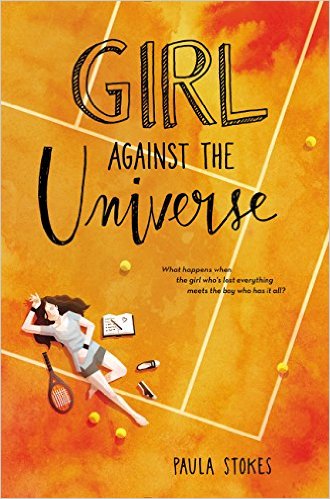
Six Questions: Interview with Paula Stokes, author of Girl Against The Universe

Good morning, everyone! Another Six Questions entry for you, and I think this one is particularly interesting. The book is questions is Girl Against The Universe, and the author is Paula Stokes.
From the summary:
From the author of The Art of Lainey and Liars, Inc. comes a fresh, contemporary story about a girl coping with PTSD and the boy who wants to help her move on from the past.  Perfect for fans of Sarah Dessen or Jenny Han.

Sixteen-year-old Maguire knows the universe is against her. No matter how many charms she buys off the internet or good luck rituals she performs each morning, horrible things happen when she’s around. Like that time the roller coaster jumped off its tracks. Or the time her brother, father, and uncle were all killed in a car crash–and Maguire walked away with barely a scratch. Despite what her therapist tells her, Maguire thinks it’s best to hide out in her room, far away from anyone she might accidentally hurt. But then she meets Jordy, an aspiring tennis star who wants to help her break her unlucky streak. Maguire knows that the best thing she can do for him is to stay away, but it turns out staying away may be harder than she thought.

1) Being a psychiatric registered nurse must be the perfect background to write a book like this! Can you talk a bit about how that experience informed your writing?
 
I wasn’t a psych nurse when I wrote this book back in 2014, but I was an RN with a BA in Psychology. I enjoyed incorporating some of the psychological theories that have really resonated with me–like selective attention, self-fulfilling prophecies, systematic desensitization, attribution errors, etc.–into the story. In fact, researching for and writing this novel is part of what made me realize I wanted to go back to nursing but pursue a mental health focus. Having a general background in both psychology and nursing helped me know the right questions to ask, and I reached out to a psychologist and to a couple of friends in therapy for advice on some of the scenes.
 
 
2) What kind of feedback did you get from people who have had similar experiences to your main character, or who have PTSD/anxiety disorders?
 
One of the things I did prior to publication was give the manuscript to three people who had talked openly online about having anxiety and/or PTSD to get their feedback. One of them I did not know at all, but she was a well-known blogger in the YA community who I was following on Twitter and I just saw an opening and went for it. It was scary waiting for their thoughts, but all three of them were really positive and thought the book balanced the reality of mental illness with a hopeful outlook for people who are struggling. They felt I did a good job capturing the somatic symptoms and thought processes of someone with anxiety and PTSD. I have a moderate amount of social anxiety myself, and this book was partially inspired by my own illogical thoughts about how I was responsible for a string of bad events that happened on a solo vacation I took, so I definitely modeled Maguire after myself in places. Obviously my own experiences aren’t going to be the same as other people’s, so the portrayal of anxiety and PTSD didn’t work for everyone, but mental illnesses are not monoliths so that’s to be expected. I’m sorry to anyone who I let down because they didn’t see their struggles represented in this story.
After publication, the reviews were mostly positive and several people sent me messages about how the book spoke to them on a personal level, how it made them want to be more brave or to reach out and ask for help. One big YA blogger reviewed the book and said she wished she’d had it when her mother died, because then maybe she would have gotten the help she needed. It’s incredibly rewarding to send a book off into the world and see it have such a positive impact.
 
 
3) One of the concepts I address in my book is that recovery isn’t an end state, it’s a journey – your writing seemed to mirror that concept. What advice to you give for young adults – heck, anyone, really – who are living that reality and frustrated by it?
 
This is hard for me to answer because everything has always been a journey for me. I grew up in a low-income Midwestern household where my parents were always struggling both personally and professionally. At no point ever would I have described my childhood as stable. Ever since I moved out, my life has been a series of trying on careers and relationships and places to live in a quest for a stability that I still haven’t achieved. I’m over 40 now and it still feels normal to me to be a total work-in-progress, so it’s kind of the same with mental health. The idea that you can just make the right choices and put in X amount of effort and then everything will be fine is a fallacy. I don’t think life works like that for most people. Everyone has stressors and if one of your stressors happens to be mental illness then you’ve got to learn how to minimize how disruptive it will be to your life and accept that you may never be totally *cured* but you can still have a full and rewarding existence. In the book, the therapist, Daniel, says that mental health is fluid and that’s true for everyone. Even people who have never met the diagnostic criteria for a mental illness still have their good days and bad days. So I guess my advice would be that everyone needs to stop trying to be perfect and just be open to who we are and make who we are work for us as much as we can. And therapy! I went to therapy last year because my anxiety was starting to negatively impact my personal and professional life and even just six sessions helped me so much.
 
 
4) Did you design your book to be read by the general public or specifically those that can relate to your main characters struggles? I imagine both, and if that’s the case, how did you straddle that line?
 
The straight answer is that my editor would not have approved the book for publication if she didn’t think it would appeal to a general audience, but I had no idea how the book would be received by people who hadn’t struggled with mental illness or couldn’t relate to Maguire’s magical thinking. I don’t ever think about the “business side of things” when I’m drafting. The story needs to be told the way it needs to be told and if I had the Sales/Marketing team in the back of my brain muttering “But will rich readers from Northeastern cities want to read this? Will librarians in Mississippi buy this for schools?” I would never be able to finish a book.
Once I got done with the initial draft, one of my first beta-readers said she thought the book would really resonate with kids who blamed themselves for their parents’ divorces, which was something I hadn’t even considered. Basically I hoped that even if readers couldn’t relate to Maguire feeling like the Universe was against her, that they’d be able to relate to what it’s like to struggle against negative thoughts that hold us back from being the people we want to be. And if they couldn’t do that, well, the book is still a cute romance with some funny moments and a poignant story about finding your place in a blended family.
In the revision process, I focused on making the abridged therapy sessions thought-provoking for everyone and giving the therapist a personality so those chapters didn’t just feel like me as the author telling readers what to think. I also pulled back on some of Maguire’s obsessive thoughts in places where I felt like being in her head might be getting exhausting or overwhelming for readers who had never struggled with anxiety or PTSD. It’s definitely a tricky balance to represent something like anxiety realistically but also doing so in a way that makes people want to keep reading. I think my best suggestion for writers is to spend time getting to know your characters and understanding them as fully fleshed-out people. Readers will be more likely to root for characters who feel real to them, and they’ll also be more willing to struggle alongside them, even when they can’t relate to what the character is going through.
 
5) What’s your advice to authors who want to write credibly about a subject like PTSD or mental illness, but they don’t have the life experience to necessarily do so?
 
My advice for anyone who wants to write outside their own perspective or experiences is first to reflect really hard about *why* they want to write that particular story. I support the #ownvoices movement, but I also think authors should be able to write any story they need to tell. (And if you’re not sure how I can reconcile those two things, it’s simple–I think publishers need to publish the best stories without imposing any kind of cap or quota based on characters’ cultures, races, disabilities, orientations, etc. If you publish thrillers and you receive five thriller manuscripts with gay, disabled, Chinese protagonists and they are all awesome then publish them all–it’s not like those groups haven’t been underpublished in the past.)
But when it comes to writing outside your experience, I think authors need to have a specific reason for doing so, beyond “oh well I saw this article about a person with X disorder and I realized there aren’t many books about X disorder so it seemed like a cool thing to do.” Mental illnesses aren’t “cool things” to be exploited for profit any more than races or cultures are, so my recommendation would be that unless the writer has a strong personal motivation to tell the story, e.g. “Someone I love has panic disorder and I wrote this book both as a tribute to her and a way to better understand her so I can support her when she’s struggling” that they should steer clear.
In order to write convincingly from outside your experiences, especially when representing a marginalized group, you need to be willing to commit at least an hour of research time for every hour of writing time (which is a lot easier to do if you have a strong personal motivation for telling a story). You need to be brave enough to approach multiple members of the group you’re representing to read your manuscript and you need to be open to hearing their honest feedback. You need to be willing to take responsibility and apologize when you mess up. You need to accept the fact that no matter how hard you try, your portrayal won’t work for everyone (see above, not a monolith), and that your good intentions may be interpreted negatively. You may offend some people who might then decide to be very vocal about what they didn’t like about your work. Writing can be terrifying, huh? Good thing we all make millions of dollars. Oh wait… 😉
6) When it comes to mental health, anything you wish authors would do more? Less?
 
Here’s a short list 🙂
 
1. Stop portraying therapists as either lecherous dudes who sexually harass main characters or new-age hippie ladies who mean well but are hilariously bumbling at their jobs and completely hopeless at helping their clients. These portrayals are ubiquitous in movies and books and the overall result is to make people less likely to seek therapy. Therapy isn’t right for everyone, but it’s a powerful tool that can help a lot of people and we need to be encouraging people to seek help, not avoid it.
2. Stop portraying psychiatric medication as some sort of evil force that takes away people’s emotions or turns them into zombies. I work at a psychiatric hospital where 90% of the patients are on some sort of antidepressant, antipsychotic, or mood stabilizer and not a single one of them has turned into a zombie. MEDICINE SAVES LIVES. Also, it’s not 1970 anymore. There are tons of different psychiatric medications and if you try one and don’t like how it makes you feel, you can just tell your provider about the side effects and they can often eliminate them by adjusting the dose, dosing schedule, or medication regimen. Sometimes it is literally as simple as taking your dose at night before you go to sleep instead of in the morning. Like therapy, medication isn’t right for everyone, but no doctor is going to force you to take it unless you are in an inpatient facility under a court-mandated hold and an active danger to yourself or others. So if it *might* help, why wouldn’t you want to give it a try? Again, as writers we should think long and hard before we actively discourage people from pursuing treatment that could change their lives (and the lives of those around them) for the better.
3. Be realistic when combining mental illness and romance in the same book. “Love cured my depression” might make for a great Disney movie, but it’s not at all realistic and perpetuating the “love conquers all” myth can do a lot of harm to people who are actively struggling. Long-term unconditional love, like that of a parent or sibling or best friend can definitely help–people with strong support networks are more likely to reach out for assistance–but in books (and YA in particular) there was a tendency in the past to have a struggling character meet a new romantic prospect and find healing through “new love.” I don’t know about you, but to me new relationships are extremely stressful–there’s this element of crushing uncertainty about who likes who more and whether the other person will leave me if they find someone better or if I confide in them or share too much. They tend to exacerbate, not cure someone’s mental illness. I made a point when writing Girl Against the Universe to have Maguire push Jordy away at first because she knows she can’t handle a relationship, and then later in the book there are examples of where their fledgling romance complicates things for both of them as opposed to being some sort of magical salve.
4. Remember that mental illness is a long-term thing for most people. Authors don’t need to “fix” everything by the end of the book. Even if you want a happily ever after for your main character, keep in mind that plenty of people with mental illness are living rewarding and joyful lives. Having your character make the decision to seek help or having them improve somewhat with therapy but acknowledge they’re still going to struggle is a realistic way to portray mental illness in a novel. You don’t need to come up with some kind of miracle cure by the epilogue.

Op-Ed: Suicides of Bourdain, Spade remind us troubles many face

As last week’s entry showed – and as I know far too many of you can understand – last week’s suicides of Anthony Bourdain and Kate Spade shook me. Celebrity suicides always do. But, sadly, we know that the suicide contagion effect is real. I wanted to try to do something to stop it.

My local paper, the Morning Call, was kind enough to let me write this op-ed. I’m copying the text below, but if you can click on the link, please do.

We all have to speak up about this issue if we’re going to do anything about it.

When I opened Facebook on Friday morning, there was one sentence that I kept seeing, over and over again: “Not Anthony Bourdain!”

On Tuesday, it was: “Not Kate Spade!”

The death of two people who seemed to have it all was exceptionally tragic in and of itself. Unfortunately, the problem is so much more severe than that.

There is something particularly painful about suicide. Thankfully, most of you cannot fathom how someone could kill themselves, and that is a blessing.

But, please remember: Suicide and mental illness are disconnected from reality. People like Anthony Bourdain and Kate Spade seemed to have it all. But if you have some sort of mental illness, your brain and your heart may not recognize happiness or joy. It doesn’t matter who you are or how much joy you may seem to have — if you are mentally ill, your brain will not enjoy a life that “should be happy.”

Unfortunately, there is a suicide contagion affect: People are more likely to kill themselves after a high-profile suicide, and that risk is heightened among similar demographic groups. This may be a very dangerous time for people who face an increased risk of suicide.

To those of you who view suicide as an option, allow me a few words. They come from times in my life where I was so depressed I viewed suicide as an option. Give me the chance to talk to you as someone who spent hundreds of hours I’ve spent in therapy and takes anti-depressants to start every morning.

I beg you: Please remember that there is more than the pain of this moment. It’s a cliché, but it’s accurate: Suicide is a permanent end to a temporary problem.

I’ve written about this in The Morning Call before, but it’s worth telling you about my personal story again. My own suicidal moments came in college. I was a new student and scared out of my mind. I barely had any friends and I had been torn from everything I knew and loved. A bad roll of the dice in terms of genetics already predisposed me to depression, and I began to sink. I began to sink so badly that thoughts and plans of suicide began to float around in my battered brain.

Thankfully, I recognized I had a problem. I sought counseling and medication. Depression is part of my story. It always will be. I have struggled, but I have survived.

I am using myself to make a point. I was driving the other day, thoughts wondering, and my mind drifted back to this low point in my life. I was struck by this sudden realization: What would have happened if I had killed myself 17 years ago?

The answer is simple: My family and my closest friends would have been left with a hole in their heart, one which would have never really healed. Meanwhile, someone else would have lived my life, married my wife, had my kids. Someone else would have had the jobs I’ve worked and be representing the people of the 132nd District. Everything that should have been mine would be lived and loved by someone else.

And I was struck by what a waste that would have been. And what a tragedy. Choosing to end my life would have been an especially premature decision. My life is not free of pain, but by and large, it’s a good one. I wake up every day grateful for the decision I didn’t make.

I’ve had access to the treatment that I need. Everyone should be as fortunate.

Suicide is not an isolated problem. There were 45,000 suicides in 2016 in the United States — more than twice the number of homicides. That’s roughly 123 a day. Five an hour. One every 12 minutes.

Suicide is the 10th leading cause of death in the United States. It is the second leading cause of death among those aged 15-34. In Pennsylvania, it’s increased 34 percent since 1999. In Lehigh County, we’re losing roughly one person a week to suicide.

The money we spend in this area means something. Repealing Obamacare would have cut off mental health care access to millions of Americans and unquestionably increased suicide rates. We have a major mental health care practitioner shortage in this country. Millions upon millions of Americans cannot afford their prescription drugs. These things matter.

But I’m tired of hearing elected officials say that mental health matters. Don’t show me your words, show me your budget. Show me what programs you are creating to address suicide. Show me how you are dealing with the suicide among veterans and first responders. Show me what programs you are funding to ensure that we are caring for all Americans, no matter what they look like, where they come from and how wealthy they are.

Don’t give me your thoughts and prayers. Give me the money and the means to actually stop suicide.

To those who are afraid — to those who are anxious, addicted or alone — please know that there is hope. You may not be able to feel it, see it or believe it. But I suppose I am asking you to have faith — faith in yourself, in God, and in those who love you now or will love you in the future. As my own story exemplifies, there is always a reason to live, even if you may not know it at the time. As long as you breathe, you have hope.

Mike Schlossberg of Allentown is state representative from the 132nd District. If you or someone you know may be considering suicide, contact the National Suicide Prevention Lifeline, 800-273-8255; in Spanish, 888-628-9454; for the deaf and hard of hearing, 800-799-4889; or by text, 741741.

The tragic suicides of Kate Spade and Anthony Bourdain

I just dropped my kids off at school. I swear, I literally just dropped them off at school, and said to myself, “When I get back, I need to write a blog entry about Kate Spade’s suicide.”

I sit down at my computer. I open the internet. And I see this: Anthony Bourdain, CNN host of “Parts Unknown,” killed himself in Paris. He was 61.

I wish I had the adequate words right now to express how I feel. More life lost to an illness that continues to haunt us, and one that far too many cannot fully understand.

A few points, I suppose, as I try to gather my thoughts.

  • If you need help, there are so many resources available to you. Call a friend, a colleague, a teacher, a loved one. And never, ever hesitate to call the National Suicide Prevention Lifeline at 1-800-273-8255.
  • Suicide knows no limits. No boundaries. It doesn’t care who you are or how successful you may be. People like Kate Spade and Anthony Bourdain seemed to have it all – money, fame, family. They seemed to have access to everything most of us could ever dream of. But the tragic truth is that none of that means a damn thing if you are in pain. The mind and the heart are disconnected from reality in the case of mental illness. That makes their suicide’s all the more shocking and painful to us all.
  • Please, please, watch how you discuss suicide. Avoid phrased like “committed suicide” or “completed suicide” – try to use “killed himself/herself” or “died by suicide.” For my friends in the media, here are some excellent recommendations.
  • The suicide contagion effect is real: A prominent suicide will often serve as a trigger for more, particularly within similar demographic groups. Please, watch your friends.

All of us have a responsibility to watch for each other – to care for each other. If you know someone who is in pain, care for them. Call them. Tell them you love them. The only way any of us survive us with each other. A mere phone has the potential to save a life.

Take care of each other. Today and all days.

The book did a cool thing! The book did a cool thing!

As you can see from that picture, I am currently beside myself.

The book is selling – it is selling well – and is currently NUMBER ONE in new releases in a topic near and dear to my heart: Teen & Young Adult Mental Illness Fiction eBooks.

For whatever it is worth, to those of you who are sad, who are depressed, anxious or alone: I was once so depressed I thought killing myself might be the only option to move forward. I’ve learned how to live my life and turned my depression into a good story. Redemption, a story about depression, anxiety and saving the world, is inspired by my own darkest moments. It may now make a difference because I tried to find a way to live.

Please remember that in your own worst days.

Order today from Amazon
Order today on the Nook
Order today on iTunes
Order today from Kobo
Order today from Smashwords

To order a print copy directly from the author, follow this link (it wills say “Pocket Protector Games but that’s just the name of my LLC, I promise!).

Twenty young people wake aboard the spaceship Redemption with no memory how they got there.

Asher Maddox went to sleep a college dropout with clinical depression and anxiety. He wakes one hundred sixty years in the future to assume the role as captain aboard a spaceship he knows nothing about, with a crew as in the dark as he is.

Yanked from their everyday lives, the crew learns that Earth has been ravaged by the Spades virus – a deadly disease planted by aliens. They are tasked with obtaining the vaccine that will save humanity, while forced to hide from an unidentified, but highly advanced enemy. 

Half a galaxy away from Earth, the crew sets out to complete the quest against impossible odds. As the enemy draws closer, they learn to run the ship despite their own flaws and rivalries. But they have another enemy . . . time. And it’s running out.

Six questions: Kristy Acevedo, author of Consider

So, on the heels of my book coming out yesterday, here’s another author interview for you, and this one was kind of fun. This book is called Consider, by Kristy Acevedo. It’s part of the portals series, which does something that I wish more authors did: It discusses mental illness/anxiety attacks from a science fiction perspective. Interested? Read on for more!

1) Ah ha! Your book is one of the rarer ones that gets out of a typical YA-genre while still addressing mental illness. What made you deal with anxiety disorders in such a way?

One of my overall goals when writing CONSIDER and CONTRIBUTE was to create a realistic teenager with an anxiety disorder who has to deal with a sci-fi phenomenon. I wanted her honest struggle and the complex relationships in her life to give the story a gradual depth that would hit at gut level. Alexandra is strong, vulnerable, compassionate, and flawed, and becomes heroic. To do this, I decided to write in first-person, present tense, which was a struggle to maintain for the entire series. It was worth it to give Alexandra’s character the focus she deserved.
 
2) Minus the hologram part, is your book based on personal experiences with anxiety that you have shared? How did those experiences inform your writing? If not, how did you learn how to write about anxiety in such a credible way?
All the anxiety in the book is based on experience, not research. While I don’t have an anxiety disorder, I have several close family members with mental health issues, mild to severe, and over the years I’ve been their advocate during panic attacks, hospital visits, etc. With permission, I’ve combined several experiences to inform Alexandra’s unique character. I wanted to write a character struggling in a realistic way, who also shows tremendous courage and strength and becomes the hero of the series, because that’s how I see those people in my life, even if they don’t always see themselves that way.
 
3) What kind of feedback have you received from people with anxiety disorders about your book?
I’ve gotten many emails about how much they connected with Alexandra’s anxiety, and how, even though the series gets sinister and tragic, they felt a sense of hope witnessing her grow as a hero. They thanked me for portraying her character with no sugar coating and no sudden cures. Some readers said they had to take breaks while reading since her anxiety was so accurate, it triggered theirs. I apologized for that, and they reassured me that meant it was so good.
 
4) This is completely random, but you are a teacher. Do your kids ask you about your writing often? How do you bring it up as you teach?
 
On the first day of school, I introduce myself and my journey to becoming a professional writer. Then I tell students I will never bring up my books again during class unless they ask me a specific question. I tell them I am first and foremost their teacher, not their author, and that I don’t want to be that obnoxious person always talking about my work. Usually, they nod and laugh and respect that I’m here for them.
 
They tend to only bring up my books during writing assignments. Some of them are intimidated at having an author as their high school English teacher, worried that I’m going to “grade them harder.” I reassure them that I’ve been teaching for almost twenty years, and I know how teenagers write. I also model drafting with them, writing crappy opening paragraphs and asking the class to edit me, and that usually empowers them to see that even published authors struggle to write. Or when I’m reminding them how important brainstorming or outlining is, someone will ask, “Do you do that for your books?” So I will explain what works for me and show them samples.
 
And sometimes, a student will come after school dying to talk to me after reading my books, and that’s incredible to witness in real time.
5) What is your advice to authors who want to write in a more inclusive way about a whole slew of topics/characters – be it ethnic diversity, LGBTQ, physical disabilities, mental illness – but don’t actually have the personal experience to discuss the issue?
 
Support marginalized writers and amplify their voices. That should always come first.
I know writers want their stories to reflect the world around them, but they need to ask themselves if they can bring diverse characters to the page authentically and without harm to those communities. You shouldn’t be writing diverse characters if you spend most of your time in a non-diverse community. So my advice would be to diversify your life before diversifying the page.
6) Portals. Why portals????
Why NOT portals? Hahaha! I was binge-watching Doctor Who when I got the idea for the Holo series. Since Doctor Who is all about traveling through time, it was inevitable to end up with some sort of portal element.
If you enjoyed books that discuss science fiction and mental health, I hope you check out Redemption, my YA/Science Fiction novel about depression, anxiety and the end of the world.

Interview: Not Another Anxiety Show

Hey folks – a quick entry here, just wanted to share a podcast interview I did for those of you who are interested. Thanks to Kelli over at Not Another Anxiety Show for hosting me on her podcast, where we discussed mental health, politics, and I miiiiiiiiiight have mentioned the book I have COMING OUT TOMORROW.

Here’s the show. Enjoy!

The language of suicide, and why it matters

As you may have noticed, whenever I discuss suicide on this blog, I’m always very careful on how I phrase it, although researching this blog entry has made me realize that I’ve been messing this up to. There are words and phrases you should and should not use when describing suicide – here’s a quick overview about some best practices.

Why “committed suicide” is bad

This one is more obvious and stigma oriented. Simply put, “committed” is used to describe a crime. Someone committed a murder. They committed a robbery.

Committed, in this context, is usually associated with a moral judgement, and that’s not a way that any of us want to describe suicide. Suicide and mental illness shouldn’t be associated with a moral failing. Doing so can make people who suffer feel weak or ashamed, and that can serve to increase the stigma that surrounds both mental illness. The language we use should encourage others to seek help, not drive them into a closet of fear and shame.

Why “completed suicide” is also bad

This is the phrase I’d always used – I viewed it as preferable – but this is a really good point:

Think of the sense of accomplishment you feel when you complete a big project. Then think of the disappointment you feel when you don’t.

Completion is good, and suicide isn’t.

To complete something conveys success; to leave something incomplete conveys failure.

Indeed, we do associate completion with success, and no one’s suicide should be viewed as a success. So, there must be something else.

The alternatives

I think the AP is on track when it comes to these alternatives. The phrases used here are preferable, in that they are accurate and avoid the moral connotations that comes with “completed” and “committed.”

Language matters. Words matter. We know that the way we describe an action can unintentionally pass judgement over the action and can increase or decrease the stigma that comes with it. All of us have an obligation to be careful in the way we talk, and I’m going to be better at this from now on.

And one more thing: In our society, there’s been a backlash against being “politically correct” when it comes to how we describe things. My experience has been that this backlash is more orientated around being a decent and non-racist person, but that’s besides the point.

The way we discuss suicide has nothing to do with political correctness. It has everything to do with creating an environment that makes people feel safe, that supports (rather than harms) their mental health, and that can increase the odds of someone seeking help instead of ending their life.

Any thoughts you want to add? Any other language recommendations? I’d love to hear them – please let us know your thoughts in the comments!

Three ways social media can be good for your mental health…I guess….

Despite my own personal obsession with social media, I have written repeatedly about how bad it can be for your mental health. That being said, I remembered something the other day: Social media changed my life in a very important way. It was through someone else’s stupidity, but that still counts!

Allow me to refer to a blog entry last week:

Let me go backwards. Robin Williams completed suicide on August 11, 2014. He had long suffered from a slew of mental health challenges, including depression and substance abuse. However, Williams was suffering from “diffuse Lewy body dementia,”which ultimately contributed heavily to his suicide.

William’s suicide ultimately inspired me to go public with my story. That started when some idiot on Facebook decided to spout off shortly after Williams’ death by saying something along the lines of, “So sad Robin Williams committed suicide. He just needed to pray to Jesus more!”

No, you schmuck, that’s not how it works, and that ignorant comment got me so damn fired up that I wrote an op-ed in my local paper, detailing my own struggles with depression, anxiety and suicidal ideation. That, in turn, set my career in motion in a very different way, making me become much louder about mental health issues. I’ve spoken at events detailing my own struggles, cofounded a mental health caucus, appeared in PSAs and introduced legislation designed to help those who are suffering from mental health challenges. I know that the work I’ve done in this realm has helped people – and I know I have a lot more to do to help more.

As much as I hate to admit it, while thinking of this moment the other day, I realized something: It happened because I was on Facebook at that one specific moment. If I hadn’t been, I would never have had this very positive, life-changing experience. My life would be dramatically worse.

So, even I must admit: Social media can be good for your mental health.

How else can it be helpful? Here’s a few thoughts, but with an important caveat: It all depends on the users. Social media can be good for your mental health, but that only occurs if you are willing to approach it from a certain perspective and/or change your way of thinking.

1) Social support: I firmly believe that social media cannot replace real-world interactions – but that’s not to say that they don’t have a place. Social media can help people feel connected to each other if people join supportive groups, develop healthy relationships and give as much as they take over the course of regular conversations. It can also make it easier to discuss important problems:

A common dilemma among people with mental illness (including depression) is the reluctance to talk to people closest to them about their problems. More and more young people are turning to the Internet for health advice, including topics such as contraception, acne treatments, etc. Far from being a singularly-destructive force in their development, social media can, in fact, do quite the opposite.

This is the opposite of the unrealistic expectations that haunt so many on social media. Instead of making people feel more isolated, it makes them feel more connected – and less alone.

2) You can get closer and learn more about people you’re already friends with: My wife and I have a running joke that, whenever we go to a public event, someone will say something to me about my most recent Facebook post. I try to return the favor whenever possible. Social media – when used to strengthen real world relationships – can be very helpful.

3) You can actually learn something: We’ve all seen it – the political conversation that isn’t really so much a “conversation” as it is “two idiots yelling at each other and accomplishing nothing other than polluting your Facebook wall with their mind garbage.” Social media isn’t always the most conductive place to have a political conversation – but, imagine, for a moment, that you approach a political debate with a different perspective. A willingness to listen and to learn. It is possible to actually learn something from social media debates if you can change your mindset and approach these conversations with an open mind. Maybe you won’t be convinced of someone else’s viewpoint, but hopefully, at least, you can better understand their perspective, and that’s exceptionally important in today’s fragmented society.

As always, I welcome your thoughts. What am I missing here? Let us know in the comments!

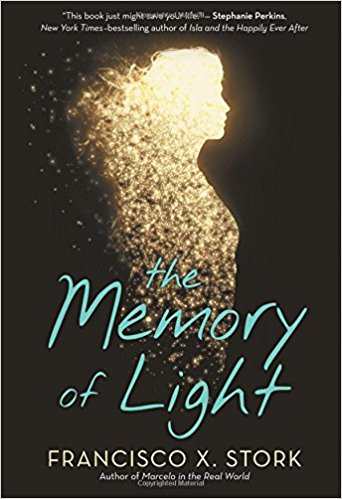
Six questions: Interview with Francisco X. Stork, author of The Memory of Light

I have to be honest here: This one I came across in the course of doing research for these interviews, and I was so interested in the plot I read it. It was gripping, heavy, painful and beautiful. It’s absolutely worth reading.

From the blurb:

“When Vicky Cruz wakes up in the Lakeview Hospital Mental Disorders ward, she knows one thing: After her suicide attempt, she shouldn’t be alive. But then she meets Mona, the live wire; Gabriel, the saint; E.M., always angry; and Dr. Desai, a quiet force. With stories and honesty, kindness and hard work, they push her to reconsider her life before Lakeview, and offer her an acceptance she’s never had.

But Vicky’s newfound peace is as fragile as the roses that grow around the hospital. And when a crisis forces the group to split up, sending Vicky back to the life that drove her to suicide, she must try to find her own courage and strength. She may not have them. She doesn’t know.

Inspired in part by the author’s own experience with depression, The Memory of Light is the rare young adult novel that focuses not on the events leading up to a suicide attempt, but the recovery from one — about living when life doesn’t seem worth it, and how we go on anyway.”

Here are six questions with Francisco X. Stork, author of The Memory of Light.

1) Your book is heavily inspired by your own experiences with depression. What made you decide to “go public,” so to speak, with that experience?

The decision to connect the story in The Memory of Light to my own experiences was made shortly before the book went into production. It was then that I wrote an author’s note where I mentioned my own life-long struggles with depression and with a suicide attempt when I was in graduate school. I had talked about my depression and bipolar disorder in my blog before, but it was the first time I talked about the suicide attempt. I realized that there was still a lot of shame and guilt associated with that and I thought that I should try to confront that shame and stigma, just like the characters in my book. I also wanted the readers of the book who were suffering from depression or considering suicide, to know that I understood in a very personal way what they were going through and that the hope and light offered by the book was hard-earned and genuine.

2) How much of you can be found in your main character?

One of the reasons I made my main character, Vicky, a young woman is that I thought it was important to create some separation from my own experiences and the main character. If the character had been male, I would have a tendency as I wrote to see myself as the main character. The distance between me and Vicky gave me the ability to filter my own experiences and feelings and transform them into those of a sixteen-year-old young woman and to express these feeling the way she would. Of course, there is a lot of me in Vicky. But the novel is not a memoir and so what mattered was the creation of a unique character that would be real in the heart of the reader.

3) Much of your book seems to deal with the resilience – the ability of the main character to cope. Did your book consciously attempt to teach readers how to build their own resilience? 

For many of us, even with medication, depression is a chronic condition and even when we are “well”, it is always there lurking beneath the surface. So “resilience” or the ability to cope and to live useful and peaceful lives despite of it, is an important goal. This requires that we let go of images of “happiness” that our society gives us and that we create our own realistic version of a life that contains joy and meaning despite depression.

4) How was The Memory of Light therapeutic for you? Or was it? Did you find it dredging up old memories?

I’m not sure “therapeutic” is the right word. The book did not cure my depression or necessarily make me feel better for expressing heretofore hidden truths about myself.  When you seek to write fiction as opposed to memoir, the goal is to create an experience for the reader, something that touches him or her in a real way. The benefits for the writer, when fiction is done well, is the unforeseen discoveries about self and the world that the writing brings about. I understood and saw things about the illness of depression and how to live with it, that I had not understood and seen before. I felt less anger toward my own depression and was able to see the negative moods that come with depression with less condemnation and judgment and with a greater awareness that these negative states were not permanent.

5) What do you think readers can learn from your book about depression and recovery?

My hope is that in the process of reading the book, the reader will become involved with Vicky and the other characters in the book and grow to care for them. If that happens, there will be a good chance that the reader will be able transfer that same care and love to him or herself. The horrible thing about depression is the feeling that we are not good enough, that we are not worthy of all the good that life offers. But when you see a character like Vicky slowly learn to accept the good in her and in others, then it will be easier for us to feel the same about ourselves and about others.

6) The book is now about two years old. Anything you wish you had or had not done with it?

The Memory of Light took me a long time to write and I went through various drafts making sure that the final product would be one that offered hope to a person who was considering whether life was worth living. I’m happy with the book as it is. During the past two years I’ve heard from young people who were touched by the book and found light and hope because of it. That is what I hoped the book would do. The book is no longer mine. It belongs to the reader.

If you enjoy books about young adults and mental health, then I encourage you to check out my upcoming novel, Redemptionwhich will be out on June 5 but is available for pre-order at a discounted price today. Redemption is a young adult/sci-fi thriller about depression, anxiety and saving the world.