4 Video Games that portray mental illness

As I’ve discussed before, I’m a video game nerd.  Hardcore.  And, as someone who is a bit obsessed with eradicating stigma that is related to mental illness, I remain fascinated by public portrayal of depression, anxiety and addiction.

Video games, I believe, are art.  I define art as the ability to make a profound emotional impact on a person.  As such, the portrayal of mental illness in video games – and indeed, humanity – continue to fascinate me, and make me think.  The good news is this: Video games can often describe the human condition in a more thoughtful and complete than many movies and television shows.  That line of thinking inspired this blog entry: How does video games portray mental illness?  How accurate is that portrayal?

Oh, and spoilers below.

Life is Strange: Before the Storm

LifeIsStrange

This one is the prequel to Life is Strange, one of my favorite games, made by Square Enix.  It is a walking simulator  in which you follow Chloe, the main character, as she battles her way through high school and falls in love with Rachel, the previously unseen character who plays a pivotal role in Life is Strange.  

I firmly believe that Chloe is suffering through some major depression symptoms.  Her father has died a few years before and her mother is dating a man who she openly despises and fights with; both of these experiences can lead to depression.  She drinks and does drugs often enough to have a regular dealer to whom she owes money. Her best friend is gone, and not communicating with her at all.  She comes across as angsty, but it’s more than that.  Her quotes, thoughts and actions are often self-destructive and reflect a young woman in pain.

To me, this is more than just a teen being a teen.  She’s miserable, she fights with her mom and her mom’s boyfriend, her family has financial issues, and she is clearly discovering her sexuality.  These are all symptoms that lead my to believe that Chloe is suffering from depression.

What makes the game more relatable is the game’s treatment of Chloe.  In the start of episode one, she is petulant and miserable – not the greatest portrayal.  However, as the game evolves, she becomes a more sympathetic character, and a multi-layered one at that.  You see her hopes, dreams and ability to connect with others.  And, by hearing her thoughts, you can hear all of the truly heartbreaking things she is thinking and saying to herself, about herself.

You intrinsically want Chloe to be better, to have healthier thought patterns and make better decisions.  And, in that sense, I hope that the game can give people a better idea of what it is like to live a life under duress, as Chloe clearly does.

A Night In The Woods

NightInTheWoods

Disclosure: I’m only part way through this one

A Night In The Woods is a platformer. You play as Mae, who has just dropped out of college and returned home.  I’m not very far along this one, but where I’ve gotten to, strange things are happening in her hometown after she reunites with her friends.

The college drop-out part is interesting.  Again, I’m not far in, but thus far, Mae has refused to talk about what happened to her in college, aside from saying that college “didn’t work out” or some variation of that phrase.  She reconnects with old friends, who all have their own battles:

Mae, the protagonist, experiences depression and anxiety, which sometimes create dissociative states during which she becomes completely disconnected from reality. It is implied, though never directly stated, that Gregg has bipolar disorder. His poor impulse control gets him into bad situations, and at times these factors impact his feelings of self worth. Bea and Angus both struggle with the consequences of abusive pasts and their relationships with their families.

As has been noted by Kotaku, the game’s creator’s have both discussed their own battles with mental illness:

The game’s creators have spoken candidly in the past about their own mental health struggles. Scott Benson, who animated and illustrated the game, has type two bipolar disorder. Programmer Alec Holowka runs the Everybody’s Fucked Up podcast, which aims to break through stigma around mental illnesses by interviewing people who have experienced them. (Bethany Hockenberry, the writer of the game, was unable to meet with Kotaku for an interview.)

This game is different than the standard platformer in a few ways, but chief among them is that it allows users to make dialogue choices that affect the game.  This puts you in the driver seat and gives you the perspective of Mae, thus ensuring that you get a first-hand look at what it is like to live a life with depression.

As I said, I’m only a little way into this one, but I’m very curious to learn more.

Please Knock On My Door

Disclosure: I haven’t played this one.

PleaseKnock

This is the portion of the blog entry where the games start getting a touch more obvious.  In Please Knock On My Door:

Please Knock on My Door is a simple game about a person living with depression. The protagonist, a blocky, inky-black character, lives a fairly standard life: Wake up, go to work, come home, repeat. The days are punctuated with mundane tasks like making a sandwich or showering, but each one carries extra weight as it drains — or bolsters — the main character’s mental fortitude.

The game’s art style is simple and stripped down, forcing players to experience the emotions of the game, not be overwhelmed by its graphics, and the focus on simple decisions and how draining they can be gives players the experience of depression, and the added knowledge that each decision made can weigh on a normal human being.  In that sense, it seems to concentrate on giving players the sense of just what a burden living with depression can be.

Depression Quest

Depression Quest

Disclosure: I haven’t played this one either.

Gee, I wonder what this game is about?  From the website:

Depression Quest is an interactive fiction game where you play as someone living with depression. You are given a series of everyday life events and have to attempt to manage your illness, relationships, job, and possible treatment. This game aims to show other sufferers of depression that they are not alone in their feelings, and to illustrate to people who may not understand the illness the depths of what it can do to people.

The game was designed by Zoe Quinn, who faced a slew of death threats for her efforts.  Charming.

As for the game itself: You live the life of someone with depression, making what are relatively mundane decisions about living life.  That being said, in the game, happier decisions are often grayed out, forcing the player to experience life as through someone with depression.  The game is told through a series of text decisions.  In that sense, again, it tries to get the user to experience depression from a first-person perspective.

These are just four, and there are certainly many more.  Any other games you’d like to share?  Let us know in the comments below!
Social media is (mostly) terrible for your mental health

Before I was a State Representative, my full time job was to work for the Greater Lehigh Valley Chamber of Commerce.  Among other things, I ran the Chamber’s social media, while also teaching small business owners how to make more money by using Facebook, Twitter & LinkedIn.  I used to do presentations on a pretty regular basis, and I’d always joke that, when I first started using Facebook in college, I never thought that I’d be teaching people how to use it to make more money!

Yeah, about that: I also never thought it would make people more depressed, but here we are.

First, a disclaimer: I’m still social media obsessed.  Facebook & Twitter are my two vices, with a side of LinkedIn & Instagram.  That being said, there is ample evidence to show that social media is bad for your mental health.

Here’s what the research shows.

First, social media forces others to make unrealistic comparisons of themselves with others.  I always come back to my first days in college, being stuck in my dorm room, crying, and telling my Dad that I was the only one who felt this miserable.  His response stuck with me: Of course that’s what I thought!  I was literally the only one in my room!  Countless others were in their room, bawling their eyes out, and all I saw were people enjoying themselves.

Likewise, people only upload happy, smiling pictures and their successes to Facebook and Instagram.  News feeds can give you a distorted picture of reality and lead to the impression that everyone is much, much happier than you.  That’s because people only show their successes – not their failures.  But this comparison is terrible for your mental health.

Second, social media can make people depressed. Studies have shown that social networking makes people feel more depressed and have negative effects on self-esteem.  According to this 2017 study, more time on social media is correlated with higher levels of anxiety.  Perhaps most fascinating is this 2016 study:

Users who took a week-long break from the social media site were found to be more satisfied with life and rated their own well-being as higher.

Third, social networking doesn’t necessarily make anyone more social or feel more connected.  According to a study which appeared in the American Journal of Preventative Medicine, higher social media use led to increased perceived social isolation:

Young adults with high SMU [social media utilization] seem to feel more socially isolated than their counterparts with lower SMU. Future research should focus on determining directionality and elucidating reasons for these associations.

Oh, and all of this says nothing about cyber bullying, a major problem for today’s youth.

Not for nothing, but the worst network for your mental health?  According to this Time article, Instagram:

While the photo-based platform got points for self-expression and self-identity, it was also associated with high levels of anxiety, depression, bullying and FOMO, or the “fear of missing out.”

The evidence also makes it clear that this affect can be magnified in kids and teenagers, who are still developing their sense of selves and frequently have the greatest issues with self-confidence.

All of this being said, I don’t want to make it sound like social networking is all bad for your mental health.  As the same Time article I cited above notes, there are many positives:

There were certainly some benefits associated with social networking. All of the sites received positive scores for self-identity, self-expression, community building and emotional support, for example. YouTube also got high marks for bringing awareness of other people’s health experiences, for providing access to trustworthy health information and for decreasing respondents’ levels of depression, anxiety, and loneliness.

Social networking is a tool: It can be used for good or for bad.  The problem, here, is becoming more apparent: Social media is stunting our social relationships, mental growth and ability to truly connect with each others.  While more research needs to be done, and more time is needed, it truly appears that these communication tools are having the reverse effect that they sought: They are making us more isolated and separated.  Considering their rapid and continued raise, this is a disturbing possibility.

Your smartphone may be making you depressed

I remember catching this story ages ago: A study found that the more time you spend on your iPhone, the more likely you are to be depressed.

Then, yesterday, a friend was kind enough to send me this article about how the University of Berkeley was offering students “counseling” in response to a conservative speaker coming onto campus.  I totally agreed with the article’s premise: That it is absurd to offer counseling for an optional speaker who some students may disagree with, and that such an offer does real harm to the mental health world be further stigmatizing and cheapening the need to get help.  However, there was a passage in the article which really caught my eye:

Researchers have, however, identified reasons to be concerned about the psychological health of teenagers and young adults. In her new book, “iGen,” social psychologist Jean Twenge argues that we may be on the brink of a major mental-health crisis among the generation born between 1995 and 2012, a crisis she links to smartphones and social media.

This made me wonder: Just how true is this statement?  As always, standard disclaimer: I’m not a scientist, just an observer with a real interest in mental health.  That being said, it certainly appears that the answer may be yes.

First, there’s this powerful Atlantic piece, written by Jean Twenge, which makes the case that iPhones are, without a doubt, leading to a “mental health crisis.”  It also argues that smartphones are causing problems at rates previously unheard of in past generational changes:

Psychologically, however, they are more vulnerable than Millennials were: Rates of teen depression and suicide have skyrocketed since 2011. It’s not an exaggeration to describe iGen as being on the brink of the worst mental-health crisis in decades. Much of this deterioration can be traced to their phones.

The articles conclusions are stark and tie directly to smartphones.  It makes the case that teens are going out less, spending less time with friends, showing less independence, dating less, having less sex and driving less than cohorts from previous generations.

So what are they doing with all that time? They are on their phone, in their room, alone and often distressed.

The case here is clear: Screen time makes teens less happy, and more likely to screen for depression.  Seriously, there’s a ton in this article, so if this is an area of interest to you, I highly suggest you read it.  It made me want to set my phone on fire.

Anyway….

Other articles have confirmed the link between smartphones, depression and anxiety.  What is most interesting to me is the nature of this relationship.  Anyone who has ever taken Psych 101 knows that correlation does not equal causation, meaning that just because two things are connected does not mean that one (smartphone use) causes the other (depression or anxiety).  That may be the case, but it may be that depression and/or anxiety actually cause an uptick in smartphone use; personally, I can vouch for this – when I get anxious, I frequently turn to my phone as a crutch or escape from reality.  It also may be a third item, like lack of self-confidence, simultaneously causes both depression and an uptick in smartphone use.

That being said, the Atlantic article I discussed above makes the case that the relationship is linked, and that smartphone use is causing depression.  That conclusion, however, is not uniform, per this meta-analysis:

…the studies examined were correlational, meaning that it is not clear if smartphone use causes symptoms of mental illnesses or if symptoms of mental illness cause greater smartphone use.

As I said above, I’m not a doctor or a scientist, but I do know that smartphones can have a deleterious effect on mental health and social development.  I suspect this is an area that will be the subject of increasing research as time goes on, and I certainly hope that is the case.

Now, go outside!

What you should know if you love someone with depression or anxiety

In the course of my +15 year battle with mental illness, I’ve experienced many emotions that aren’t directly related to the actual depression/anxiety.

One of the most prominent of those is a tremendous feeling of guilt.

I’ll be honest: Loving someone with depression, anxiety or any mental illness sucks.  It just does, and I’ve experienced it from both ends.  You feel so helpless, you don’t know what to do, what to say, you always feel like you are walking on eggshells…it just plain sucks.  And I’ve always felt so bad for my wife and for my kids, who have seen me at some of my worst moments.

I’ve been lucky: I think most of the relationships I’ve had over the course of my life have been healthy ones, and that’s to say nothing of my wonderful wife.  In an effort to figure out how to better help me with my mental illness, she once came with me to my therapist in order to get a better grasp on how to pull me out of an anxiety attack.  This is one of the kindest things I think she ever did for me.

Mental illness is a difficult thing to describe.  It’s hard to convey the hopelessness of depression, the sheer terror of an anxiety attack, the slavery of addiction.  It’s even harder to explain it if you are actively in the throws of it.  When I’ve been at my worst, there have been so many things I’ve wanted to say to the people who love me or care for me, but haven’t been able to find the words.  So here are a few.

First: Don’t think you can make us better.  Suffering from depression has sometimes felt like flinging out a lifeline to someone, anyone, searching for hope before drowning…but it’s still okay.  We don’t expect you to heal us…at least we shouldn’t.  That’s not your job, and even if someone you love does expect that, that’s not fair.  No one should expect you to cure them, to save them.  Love and support is all you can give, and that’s all anyone can reasonably expect of you.

Second: You don’t have to understand.  You don’t have to know everything that we are going through, largely because we may not be able to communicate it at that particular moment.  That can be one of the most difficult things, knowing that someone you love is in pain and not quite being sure why.  As difficult as it can be, let that part go.  Just focus on trying to get someone through that difficult moment.

Third: Your primary job needs to be to get someone through a crisis.  From there, turn to the professionals.  I can’t emphasize this enough.  You may feel incredible guilt and pain at not being able to heal the person you love.  Say it with me, over and over again: It is not your job to fix what is broken.  Support is the only thing anyone can reasonably expect.

Fourth: We’re not always going to be up for talking about it.  But that doesn’t mean we don’t want you there.  Sometimes, sitting there, holding our hand is the best and only thing you can do.

Fifth: Mental illness is not an excuse – ever – for poor treatment.  Understand this.  Mental illness is never an excuse for bad behavior – it may be the reason, but not an excuse.  If someone is making a legitimate effort to find their way out of the darkness, they deserve your love and support.  If they refuse to seek help, it becomes an entirely different matter.

Sixth: Everything you have to offer may not be enough.  Despite your best efforts, despite herculean levels of love, support, care and affection, it may not be enough.  You have to understand that the mental state of the person you love may continue to decline, and that isn’t your fault.  You cannot hold yourself responsible for the declining mental state of someone you love and someone who is ill.

Seventh: Don’t be afraid to reach out for help.  You alone may not be enough to get someone through a crisis, but if someone else is there, don’t hesitate to reach out.  When I’ve had some of my worst moments, my wife connected with my family and friends – if the option is available to you, do the same.

Eigth: Odds are, we’re really, really sorry.  Like I said earlier, I can’t tell you how badly I’ve felt for the lack of control I’ve endured for my own emotions, how that has effected my life and my behavior.  Trust me, it sucks every day to know that my own mental illness may lead to my kids having their own challenges one day.  That being said, if you love someone with mental illness and they’ve experienced these feelings of guilt, I’d encourage you to ask the person you love the same thing my wife has asked me: “So, what are you going to do about it?”  I may not be able to help the way I feel, the disorder I suffer from, but I can control my decision to seek treatment as necessary.  Tell the person you love to get help.  Tell them you love them.  Tell them to use those feelings of guilt as a motivator to be better, for themselves, and for you.

There’s more, but this is just my perspective, my thoughts.  I’d love to hear yours.  Please comment below, from either perspective – that of someone who is mentally ill, or someone who loves someone who is.  What do you wish you knew, or want to communicate?

Study: Depression can be treated with…anti-inflammation drugs…??

A friend was kind enough to send me this article, and this one is too strange sounding not to share: According to a new study, depression is “a physical illness caused by a faulty immune system” that can be treated with anti-inflammatory drugs.

From an article on the study:

Current treatment is largely centred around restoring mood-boosting chemicals in the brain, such as serotonin, but experts now think an overactive immune system triggers inflammation throughout the entire body, sparking feelings of hopelessness, unhappiness and fatigue.

It may be a symptom of the immune system failing to switch off after a trauma or illness, and is a similar to the low mood people often experience when they are fighting a virus, like flu.

“In relation to mood, beyond reasonable doubt, there is a very robust association between inflammation and depressive symptoms.  We give people a vaccination and they will become depressed. Vaccine clinics could always predict it, but they could never explain it.

According to the article, more tests will begin next year to see if anti-inflammatory drugs can help alleviate depression.

Obviously, this piqued my curiosity, so I did a little bit more digging.  First, this area of study isn’t new – there are studies dating back at least six years that would support the notion that inflammation and depression are linked.  From that article:

Previous studies have linked depression with higher level of inflammatory markers compared to people who are not depressed. When people are given proinflammatory cytokines, people experience more symptoms of depression and anxiety. Chronically higher levels of inflammation due to medical illnesses are also associated with higherrates of depression. Even brain imaging of people with depression show that their brain scans have increased neuroinflammation.

The article went on to recommend that everyone take anti-inflammatory steps (which are good for you regardless), including better diet, stress reduction, exercise, mind-body exercises and breathing exercises.

This is new to me, and fascinating.  That being said, it makes me nervous.  I’ve always operated under the assumption that depression – and mental illness in general – are not caused by – or treatable with – a single bullet.  They are a combination of things: Genetics, stress levels, thinking patterns, etc., that make someone mentally ill.  As such, the notion that one thing – inflammation – could be the cause of depression – well, it gives me pause.

It would be so, so wonderful to be wrong!

Two points about this research, and understand, please, that they are coming from a layman, not a doctor!:

First, more tests are required, so don’t run out and buy an anti-inflammatory today.  More information, specifics and treatment options are still needed.  For now, keep going to therapy and taking your medication, darn it!

Second, let’s say, for a moment, that future studies confirm a connection between inflammation and depression.  That does not (necessarily) mean that you should stop taking your medication or going to therapy.  Remember, all body-mind reactions are a two way street.  Yes, your body can affect your mind, of course, but the way you think can affect your body.  When you are scared, your heart rate accelerates, your breathing speeds up and you get sweaty.  Don’t think that being depressed, having negative emotions or damaging thought processes can’t potentially cause the inflammation that causes depression.  I’ve always believed – at least for me – that a combination of medication and therapy are the best way to deal with depression.  If you believe that too, don’t think that therapy will no longer be necessary just because you take some pills that can make the swelling go down.

This is fascinating.  And potentially hugely promising.  I can’t wait to track more information about this, and I really hope that this can provide people with real relief in the future.

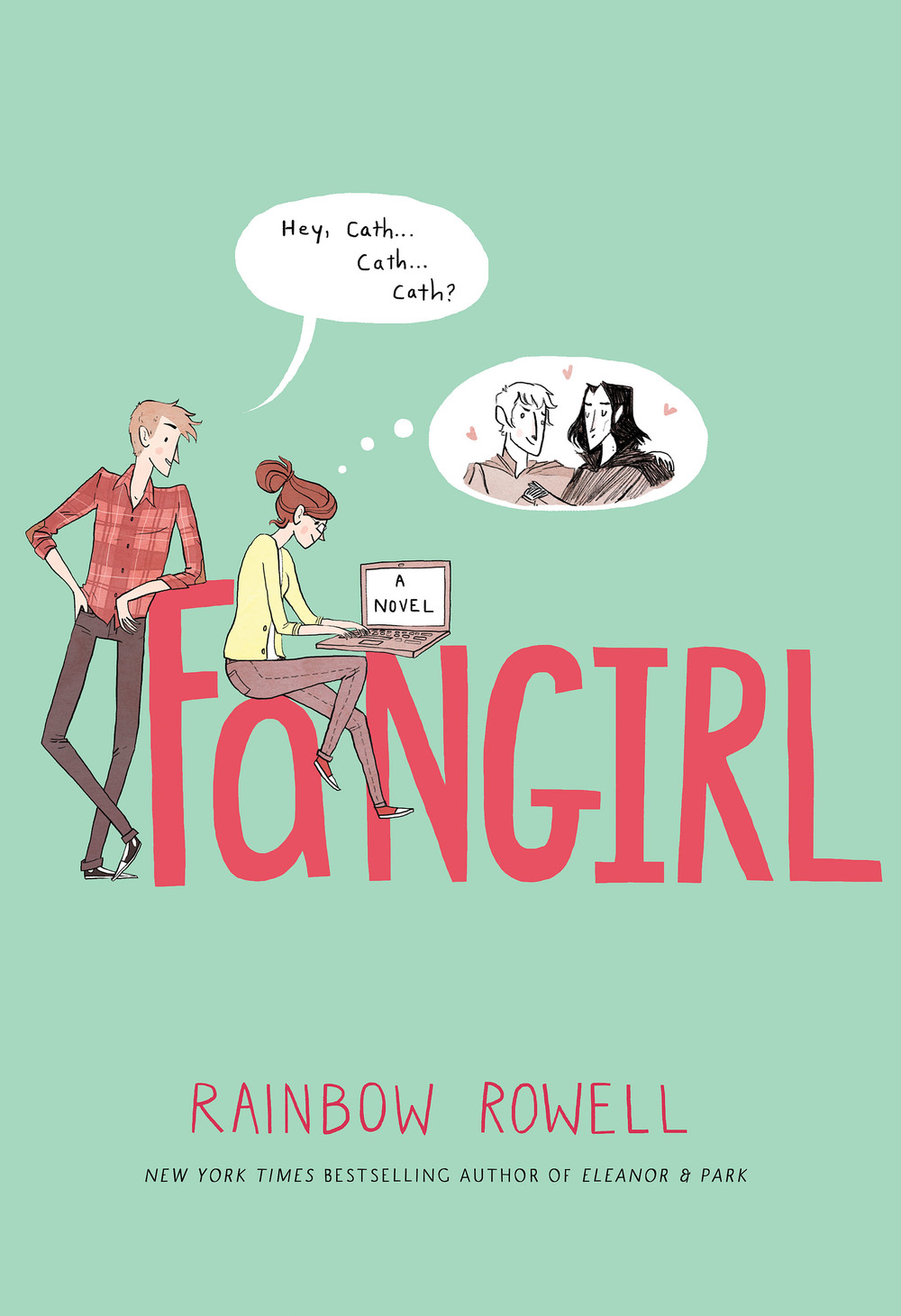
Fangirl: The book that reminded me that Writing = Therapy

As I’ve said before, one of the things that has helped me cope with my anxiety/depression issues.  There’s a few reasons for this, and I’ll get into that shortly, but I wanted to write what basically amounts to a thank you note to Rainbow Rowell, author of Fangirl, and talk a little bit about how I found a wonderful creative outlet…and, maybe, how you can too.

First, my personal history.  Ever since 8th grade, I’ve loved to write.  Like most young, male teenage authors, the first thing I ever wrote was…uhh, Star Wars fan fiction.  It was terrible, but that’s completely besides the point.  At the time, it made me extremely happy, and why not?  It gave me the opportunity to create, and feel like I was part of a franchise that I adored.  During my teenage years, writing continued – I wrote two full-length novels (unpublished, of course, probably because they were pretty bad).  In college, as the anxiety and stress continued, I tried my hand at poetry.  Again, it gave me…something.  The chance to express what I was feeling, and in putting it on paper, leave a piece of it behind.

What I remember the most about these novels, even more than their plot, is that they helped me cope.  Novel number one was about my family history, the loneliness that came with it and just being a teenager in general.  Number two was working through some of the challenges I had in my family at the time.

Both novels gave me hope.  They gave me a sense of control.  And in my worst, most loneliest moments, they gave me something to hold onto.  Not for nothing, but novel #2 never made it through revisions.  Once I came to peace with what was happening in my life, I more or less stopped writing it.

This was all in high school.  Fast forward fifteen years: I’m married, two wonderful kids and a State Representative.  To my surprise, I managed to achieve a dream and become a published author, but a non-fiction book: Tweets and Consequences.  

It was around the first half of 2015 that I hit a rough patch with my depression, arguably one of the rougher ones I had hit in years, maybe even since college, when my depression and anxiety really first began/exploded onto the scene.  At the time, I remember feeling misreable and just so helpless, searching desperately for a way out that I just couldn’t find.

What wound up pushing me to a better place was writing.  And what helped get me there was Fangirl by Rainbow Rowell.  From the book:

In Rainbow Rowell’s Fangirl, Cath is a Simon Snow fan. Okay, the whole world is a Simon Snow fan, but for Cath, being a fan is her life-and she’s really good at it. She and her twin sister, Wren, ensconced themselves in the Simon Snow series when they were just kids; it’s what got them through their mother leaving.

Reading. Rereading. Hanging out in Simon Snow forums, writing Simon Snow fan fiction, dressing up like the characters for every movie premiere.

Cath’s sister has mostly grown away from fandom, but Cath can’t let go. She doesn’t want to.

Now that they’re going to college, Wren has told Cath she doesn’t want to be roommates. Cath is on her own, completely outside of her comfort zone. She’s got a surly roommate with a charming, always-around boyfriend, a fiction-writing professor who thinks fan fiction is the end of the civilized world, a handsome classmate who only wants to talk about words . . . And she can’t stop worrying about her dad, who’s loving and fragile and has never really been alone.

For Cath, the question is: Can she do this? Can she make it without Wren holding her hand? Is she ready to start living her own life? And does she even want to move on if it means leaving Simon Snow behind?

The book resonated with me because the main character, Cath, is clearly having major adjustment issues to college (as I had) and discovering who she is.  She uses her writing to cope and get her to a better place, and the book details her struggle in terms of finding a voice that is authentic and truly belongs to her.  Cath is clearly a talented writer, and the book explores her writing journey, meshing with her adjustment to college, family separation, romantic experiences, academic struggles and more.  I’d also argue – and many others have also made this comment – that Cath is clearly suffering from some form of depression.

And that is exactly where the book hits a chord for me.  I remember there being one scene where Cath is in an advanced writing class with older students, and the professor – a big time author, if memory serves – is asking the class why they write.  One student answered “therapy.”  And that’s a note that just rang so, so true to me.

For me, writing was always a therapy for a variety of reasons:

  • It allowed an escape.  An idealized world where every situation could be reasonably thought through, all alternatives explored, and all potential problems dealt with accordingly.
  • It allowed me the chance to work through problems, to put myself in someone else’s shoes.  In a sense, I think writing allows you to sort the various parts of your head and put them somewhere better.
  • It allows you to mark the moment.  And I don’t mean remember.  I mean something stronger.  To carve it into your consciousness and make sure that the emotional core of an event – everything you are trying to deal with – are always remembered.  Every feeling, every sensation.
  • You can play God.  Play the hero, play the villain, whatever you want.
  • Ideally, you can work through your past, and channel it into something good.  I think that’s an important theme of my overall mental health journey: Once I realized I could go public, and help other people in the course of doing so, I became a better public official and a better person.

To those of you who write, in any form, for mental health purposes – I feel you.  And to those of you who don’t – maybe give it a go.


More about me: The Liebster Award

So, My Anxiety Matters was kind enough to nominate me for the Liebster Award, travels from blogger to blogger as a way to promote great content.  Thanks so much!

I really like this!  It’s nice to see bloggers recognize others.  There are a few really interesting parts of this award, including that you have to answer a series of questions.  Those are below:

1. What’s the best thing about where you live?

The sense of community.  People in Allentown – and the Lehigh Valley – generally care about each other.  The pay attention.  They are informed.  We have great corporate citizens, caring residents and wonderful non-profits.  It makes me proud to represent them.

2. Who’s your idol?

This is a really, really hard one, because there’s a few.  I don’t know if “idol” is possible for me to answer, but closest thing I can come up with is Abraham Lincoln.  Not only for what he accomplished, but for what he accomplished in the face of incredible depression.

3. Favourite inspirational quote?

Easy:  “Here on Earth, God’s work must truly be our own.” – John F. Kennedy.  It encompasses my view on religion, politics and society perfectly.  Prayers in not enough.  The only thing that is enough – or close to it – is action.

4. The scariest thing you’ve ever done?

This is really difficult.  Arguably pushing forward in the face of some of my anxiety attacks.  Bizarrely, writing the article where I first “came out” as clinically anxious/depressed wasn’t scary, though it impacted my career – and my life – in ways that I could never have dreamt.

Thinking about it logically, this speech, given on the floor of the Pennsylvania House of Representatives:

I remember being more nervous for that one than any other speech I have ever given.

5. Your inspiration for writing?

Depends on what you mean.  In terms of blog writing: A desire to “spread the gospel,” so to speak, on mental health, and bring an issue out of the darkness that has been kept there for far, far too long.  I’ll confess that there’s a self-promotional aspect to it as well; as I’ve mentioned on a few other mediums, I have a Young Adult book coming out in the first half of 2018, and the book deals with mental health and mental illness.

6. What do you do to relax your mind?

Hahaha.

Okay, okay.  That’s not fair.  I do relax, as best I can.

  • Writing/working on the sequel to my novel.
  • Just took up meditating.  Am a big fan so far!
  • Playing with my kids.
  • Video games.  I love video games, and I don’t care what anyone has to say about it!

7. Favourite feel-good song?

So hard, but here is what I went with.  LOVE Haim.

8. Your happy place?

Rehobath Beach, Delaware.  Outside of the Ice Cream Store.  Kids JAMMING ice cream in their faces.  Me with a Red Velvet Sundae.  Yum.

9. Bravest thing you’ve ever done?

That one is easy.

10. Your favourite book?

Again, a difficult one to answer.  I am a pretty avid reader.  Obviously Harry Potter, but I think that goes without saying.  But favorite individual book?  The one coming to mind right now is The Dome by Stephen King.  A book about monsters inside and out.

11. Your advice for someone struggling with their mental health?

I suppose two-fold:

  1. You’re not alone.  You’re never alone.  1 in 5 adults suffer from mental illness every year, and there are thousands of people – if not millions – that will drop everything to help you find peace.  Don’t give up, because there are millions of us out there – including me – that are living proof that you can live a good and happy life, despite what you are suffering from.
  2. Seek the help that you deserve, and don’t feel an ounce of shame.

There’s a pay it forward component to this, and I’m going to have to find some others to nominate, so let’s just take a rain-check on that one.  And again, thanks so much to My Anxiety Matters for the nomination! I highly recommend you go and check out the blog to see a very personal view of anxiety.

Physician shortages: The biggest challenge facing mental health in America

I often write about stigma and the devastating role it can play in terms of keeping people out of treatment.  I think a big part of the reason I discuss it so frequently is that it’s the one area that people can actually get involved in and feel like they are making a difference.

That being said, I need to be clear about this one: Stigma reduction, though important, is not the most critical issue facing mental health.  That, I would argue, is a lack of capacity, largely in terms of mental health practitioners.

The facts on our ongoing physician shortage crisis are staggering:

  • According to a report by the Association of American Medical Colleges, over the next eight years, the United States will experience a doctor shortage of between 61,700 – 94,700.
  • That problem is much more acute in the area of mental health.  According to one report, in order to meet demand, the United States needs to add 70,000 providers over the next eight years if we are going to meet a growing demand.  The problem is even worse for people who live in rural areas; 60% of all people in rural areas live in a mental health professional shortage area.  In general, according to NAMI, only 41% of all people with mental illness are treated, while that number increases to 63% of all people with a serious mental illness.
  • The shortage doesn’t just affect personnel, but facilities.  It can be extremely difficult for the mentally ill who need inpatient care to have access to it, with some surveys estimating that the United States needs a whopping 123,000 psychiatric beds.

How did we get here?
As you can imagine, there are a variety of culprits, including:

  • Incredibly high standards to get into medical school and a long length of time for training.
  • Crushing medical student loan debt (averaging $207,000).
  • A shortage of residency slots for hospitals.  These slots are almost entirely funded by Medicaid, and that funding has not increased since 1997.
  • High cost of malpractice insurance.
  • Varying reimbursement rates for different specialties (more on this later).

Why is this problem so much worse in mental health?
This problem is even more acute in the mental health universe, where amount of psychiatrists declined 10% from 2003-2013.  The shortage gets even more severe as you go into mental health specialties, such as pediatric and geriatric care.

Again, there are many reasons that this issue is so problematic for mental health.  For one thing, hospitals and insurance companies pay doctors more if they are involved in specialties that turn a profit, like orthopedic surgery and urology…not psychology or psychiatry.  Additional public cuts to human services and mental health further exacerbate the problem. As a result, there is less staff in this area, regardless of it’s importance.

Physician burnout is also a problem, with one study noting that “86 percent reporting high exhaustion and 90 percent reporting high cynicism.”

Another problematic area is physician training, where there are concerns that training models have not evolved enough to introduce more medical students to mental health areas.

There’s more – much more than a simple blog entry can handle.  For a more in-depth look, I highly recommend that you review this report by the National Council for Behavioral Health.

What can we do about it?

  • Increasingly utilize technology and telehealth, which some studies have shown to be promising in the area of mental health.  With additional capacity, telehealth can help overcome geographic shortfalls that occur.  Other systems, such as bed and doctor registries, can help patients in need of treatment find appropriate resources.
  • Expanded number of residency slots.
  • Adjustment to reimbursement rates to ensure that mental health services achieve parity with other areas.
  • Adjustment to licensure laws in order to allow for other certified professionals – with appropriate training – to treat patients.

It is important to not lose sight of this simple truth: The mental health practitioner shortage can devastate the quality of life of the mentally ill.  It can kill people, frankly.  In my government job, my office regularly fields calls from constituents who need help but can’t find it.  Mental health is an issue that society is only truly starting to understand and deal with.  We must ensure that the mentally ill have the access to the resources that they need.

Anxiety is like living in a box

If you are used to reading this blog, you’ve seen me discuss it before: 1 in 5 Americans suffer from some form of mental illness during a twelve month period.  That number is extraordinarily high, and it means that over sixty million Americans suffer from mental illness’ grasp during any given year.  This is shockingly high and exceptionally tragic.

That being said, here’s a different way of looking at this statistic, one that can be a little but of a head trip for advocates like me who can sometimes drown in the mental health universe: 4 in 5 Americans don’t suffer from mental illness over a one year period. While the world health organization says that 1 in 4 people will suffer from mental illness over the course of their lifetime, that still leaves an exceptionally high number of people who don’t know what it’s like, thank goodness.

Many people understand what mental illness is like.  When I first started talking about my own struggles, I was blown away by how many people said, “Me, too,” or confided that a beloved family member or friend knew exactly what this pain was like.  Even so, describing mental illness can sometimes be a challenge, so allow me to try.

As my life has gone on, I’ve often suffered from some combination of a generalized anxiety disorder, periodic anxiety attacks and a major depressive disorder.  I’d actually make the argument that the anxiety is more dehabilitating than the depression.  That’s because of this simply metaphor: Living with anxiety is like living in a box.  A box that slowly closes.

Allow me to explain.  The kicker about anxiety attacks is that they are often unexpected. While some triggers can make them occur, or can spike a general sense of unease and anxiety, many anxiety attacks occur out of nowhere, for no real reason.  For many – and this was certainly the case for me – there is only one place they don’t occur (without a very good reason): Home.  Home is the safe place.  It’s the place where nothing can go wrong.

So, you’re out at the mall, and bam, anxiety attack.  Or you are out with friends at a party.  Someone gives some backhanded insult, and there you go, down the rabbit hole of anxiety, with no end in sight.  Suddenly, you are miserable.  Stomach churning.  Palms sweating.  Heart rate accelerating.  Breathing difficult.  Hoping no one notices, you retreat to the bathroom, thinking, I need to get out of here.  And you do.  You make up some lame excuse – you’re tired, you have an upset stomach – and out you go.  You’re home.

And then the next time you get invited to a party, you remember.  Remember the pain, the anxiety, and like any normal human, you want to avoid it.  So you don’t go.

So take that situation.  Multiply it by every variable you can think of: The grocery store.  The mall.  School.  Work.  And that’s how anxiety traps you in a box.  It cuts off your life by making sure you engage in avoidance behavior, slowly chopping away joy and vital connections from your world.

Unfortunately, this is all to common among people with anxiety.  They become socially withdrawn, and at it’s most severe, it can lead to agoraphobia, which is when you avoid public situations altogether.

The best way to stop this?  It’s also the hardest: Face your fear and break out of the box. This is different for everyone, and often best done with the help of a therapist.  For me, when I was at my worst, I almost had to retrain myself to engage in social situations – go places by myself, where I was free of judgement, and just relax.  It worked, eventually, but largely because I followed a pretty regimented approach that was set up by my therapist.

As always, I’d love to hear your thoughts below.  Did I get the metaphor right?  Any better, more accurate one that you’d like to share? Let us know in the comments!

Google launches depression screening tool

I caught this over the weekend and found it to be very interesting: Apparently, Google has launched a tool that serves as a brief depression screening.

First, about the screening.  It is the PHQ-9, which is only nine statements.  It asks users to select the level of agreement with nine statements, ranging from “Not at all” to “Nearly every day.”  They include items like, “Little interest or pleasure in doing things” and “Feeling tired or having little energy.” The information can then be shared with the user’s health care provider and used to seek treatment.

This is noteworthy for many reasons.  The screening will pop up in the event that “depression related searches” are made, similar to the way that the number for the National Suicide Prevention Lifeline (1-800-273-8255) pops up for suicide related searches.  Given the prevalence of Google in modern life, this can, hopefully, help make people more aware of mental illness and steer them to treatment options.  This is also particularly important, given the spike in suicide-related Google searches.  That spike, incidentally, is tied to 13 Reasons Why on Netflix, a show I suspect I will be writing about in the future.

Indeed, I’d argue that the most significant reason that the availability of the depression questionnaire is important is because of the major rate of spikes in suicide that we are seeing.  Suicides are rising across the board, but particularly for young girls aged 15-24, who have seen suicide rates increase to 40 year highs.  Obviously, this is the generation that is the most technologically dependent, so increasing their awareness about mental illness and treatment options can be a very, very good and healthy thing.

As good of a thing as this is – and it really, really is a good thing – depression screenings are not without their problems.  There are some studies which report that versions of the PHQ can demonstrate “poor specificity in detecting major depression” or false positives.

That being said, for the sake of argument, let’s assume the absolute worst about the PHQ-9: That it leads to an unacceptably high amount of false positives for depression.  Google’s use of it is still a great:

  • First, false positives is very different than false negatives.  A single accurate, positive test about the PHQ-9 can steer people into treatment and give them the help that they so desperately need.
  • Second, it can help move positive views of mental illness in a positive direction.  Too many people still view mental illness as a weakness or something that can simply be conquered by willpower.  That, of course, isn’t the case anymore than a broken arm can be healed by well-wishes.  Having a source viewed as positively as Google advertise depression screenings can, hopefully, convince people of the importance of seeking treatment for mental health.

As always, I’d love to hear your thoughts.  Let us know in the comments!