Six Questions with Leslie Stella, author of Permanent Record

I gotta say – one of the most fun things about this blog, at least to me, is learning how other authors approach depression, and the unique spins that they give on the issue. Last week’s interview, for example, dealt with cyber-bullying and self-harm. This one’s is with Leslie Stella, author of Permanent Record, who deals with racism, terrorism and a post 9/11 world.

From the description:

Being yourself can be such a bad idea. For sixteen-year-old Badi Hessamizadeh, life is a series of humiliations. After withdrawing from public school under mysterious circumstances, Badi enters Magnificat Academy. To make things “easier,” his dad has even given him a new name: Bud Hess. Grappling with his Iranian-American identity, clinical depression, bullying, and a barely bottled rage, Bud is an outcast who copes by resorting to small revenges and covert acts of defiance, but the pressures of his home life, plummeting grades, and the unrequited affection of his new friend, Nikki, prime him for a more dangerous revolution. Strange letters to the editor begin to appear in Magnificat’s newspaper, hinting that some tragedy will befall the school. Suspicion falls on Bud, and he and Nikki struggle to uncover the real culprit and clear Bud’s name. Permanent Record explodes with dark humor, emotional depth, and a powerful look at the ways the bullied fight back.


Your book not only deals with depression, but it also deals with some very heavy societal issues—racial identity and terrorism. What inspired you to address this subject?

I wanted to explore several themes: 1) bullying, and the fine line between standing up for yourself and taking revenge, 2) the relationship between mental health, outsider status, and bullying, and 3) how a teen targeted for his racial identity might retaliate. Funneling these three concerns into the experience of one protagonist made for a gripping story, one in which readers must wrestle with themselves about whether the protagonist is justified in his actions.

As noted in your book’s description, your main character, an Iranian American, is pressured by his family to hide his identity. This is a common issue faced by many teens. How do you think this impacts someone’s mental health?

Ignoring the interplay between mental health and outsider status is a sure way to court disaster, either for the outsider himself or society. Sublimating one’s identity (whether it’s racial, gender-based, or any other facet that contributes to the makeup of a person) always backfires; you cannot grow as a human being if you deny those very facets that make you whole.

How can authors approach subjects like this with authenticity, even if it isn’t their lived experience?

Speaking for myself, if I wrote about only my own experiences, I would subject my readership to a never-ending glut of books about office work. The purpose of literature is to transport the reader—and that usually means transporting the author as well. It’s called imagination and research. Use them! They are your friends.

In Permanent Record, the protagonist’s Persian background was based on a family that my family was close to when I was in high school. My sister dated one of the brothers, and I worked for the parents for several years at a store they owned. I learned so much about Persian culture from them, including the dynamics within the family and what is expected of the children—especially the difference between expectations of the daughters versus the sons.

The book was written in 2013, but, unfortunately, many of its themes seem more relevant than ever. If you had to write the book again now, with Donald Trump as president, what would be the same, and what would be different?

Like so many things, terrorism begins at home. The ritual of school violence in our country is a brand of home-grown terrorism that our society has decided it will tolerate. If I had written Permanent Record today, with Donald Trump as president, I would likely have the covert displays of racism present as overt. People aren’t any different today than they were previously; it’s that they feel free to parade their prejudices and hatred more openly.

In looking at this book, it seems to me that it can apply to two groups: Members of the “majority” community who are looking to get a better understanding of what life is like to those who are minorities, or members of the minority community, like Badi, who are looking for a character to identify with. Did you have one of these audiences in mind more than the other?

 Why must these two great tastes be mutually exclusive? In the Reese’s Peanut Butter Cup of fiction, the writer’s job is to hold a mirror up to the world so that we can see not only ourselves but everyone else as well.

In a social media friendly world, what’s the role of books—like yours—in terms of addressing mental health and the stigma which surrounds it?

People usually feel alone when they struggle with their mental health, and social media exacerbates this: “Gee, everyone else on Facebook seems so happy; their children pose readily with handmade signs, while I’m taking pictures of squirrels ransacking my birdfeeder.” At the same time, I’m not a fan of people using social media as a substitute for therapy. A book, however, can delve deep into these problems in a way that is personal and intimate and three-dimensional, which is something a tweet or post can never do. I don’t think I’m alone in saying I relate better to complex fictional characters better than I do with most real-live people with whom I have human contact. So in that sense, I hope Badi’s struggles with depression inform readers about the complexities of mental health and the many options for treatment out there.


A strange gender gap: Men, women and writing about depression

As part of my marketing efforts for Redemption, I’ve been reaching out to other author’s in similar book categories, which means other Young Adult books which deal with mental health, depression and anxiety. These efforts are how you’ve seen some of the other Six Question entries.

The other day, I noticed something strange:

Let me give some backup here to that tweet: I just went back through my notes on other authors. I identified 115 authors who also had books in this category. Of those 115, only 18 were men; 89 were female, and another 8 either had names that could have been either gender or used initials (which often than not, means they are a woman – see J.K. Rowling, who went with her initials because her publishers were trying to disguise the fact that she’s a woman).

Anyway, that difference is massive: 115 authors, and a mere 16% are men!

What the hell is going on here?

This is just a hunch, but I think what I’ve found is a microcosm of society as a whole: Women are much more willing to discuss mental illness and emotions than men. According to research, both men and women are more likely to be viewed more negatively when they suffer from “gender atypical” mental health disorders. Additionally, according to a 2015 study, men are more likely to have negative attitudes towards health seeking, which results in a less significant uptake in using mental health services.

This blows me away. I mean, it shouldn’t – none of this is surprising, and intuitively, I think most of us recognize that women are more comfortable seeking help and discussing emotional topics than men.

There are so, so many issues facing women today. I’m so glad that, as a member of the human race, we are doing a better job at discussing vitally important issues like women’s equality and safety. But I think one of the things we don’t do a good enough job of – and my above observation would seem to back up this assertion – is discussing how these gender stereotypes also hurt men.

Please, please do not misunderstand me here – I am not saying, “Boohoo, but what about the white man, life is so hard for us, we are so discriminated against!” That simply isn’t true, and it is abundantly clear that other minorities and women have much, much tougher obstacles to overcomes than any white man does. It is also apparent that we, as a society, must do a better job at creating a more level playing field and changing our culture as it pertains to women and minorities.

But, I think it’s important to note that men can also be the victims of gender stereotyping and expectations – and clearly, this is one such example. What I would hope this observation would make us realize is that we must do a better job of working towards true equality in society – and men have many, many ways to benefit from achieving that ideal as well.

TMS Update: Is this what feeling better feels like?

So, it’s been about six weeks since I started Transcranial Magnetic Stimulation. As I type this, I’ve had about 26 sessions, with another ten or so to go.

How am I feeling? Is it working? Better. And yes. It is working. And I feel reasonably convinced at this point that it’s not just the placebo effect.

Let me discuss the second part of that question first, because I think it’s almost the most important. Why do I think it’s not a placebo effect? Because life is NOT perfect. I think – I don’t know, but I think – that if this was a mere placebo effect, I’d be sitting here, flying through the sky. Life would feel perfect. There would be birds and sunshine and candy everywhere and all that crap. Then, eventually, the effect would wear away, and I’d crash hard.

Simply put, that isn’t true. Everything doesn’t feel perfect. I’ve still gotten depressed about things, upset. Most of the time, it’s been normal life events. On a couple of days I’ve still woken up really down, but that feeling fades easier than it did before treatment. Simply put, things aren’t magical.

So then, let me tackle the question in the title: Is this what feeling better feels like? Maybe? I can’t answer that question definitively yet, because I don’t know . Look, I’ve been on anti-depressants and in treatment, as needed, since I was 18. I’m 35. Half my life. So I’m not quite sure what “normal” is.

Here’s what I do know. Since I started TMS and began to feel it’s positive impacts:

  • I’ve been enjoying things more. A lot more. A couple of examples:
    • As I’ve long since established I am a big computer game nerd. I play these games more, and I just like them more. I’ve had more fun playing them.
    • I was with my wife and my kids at a local food fair. I’m sitting there, eating this big ole Taco Salad. My son is leaning on me, eating Mac & Cheese. He’s snuggling in. I’ve got my little boy, good food, happy environment, great music. I felt good. I felt lucky. My phone was firmly in my pocket. I felt like I was in the moment. That didn’t happen before.
  • I wake up in the morning without this impending sense of dread. Without feeling like there’s a ceiling over my head, pressing down. It just feels like the world has less pressure. I still feel stressed, still feel overwhelmed. But the world doesn’t feel like it is filled with nearly as much darkness.
  • I’ve been less snappy. Less grouchy.
  • I’ve had an easier time concentrating and getting things done. My motivation is higher.
  • You know that myth about the depressed writer? Bull. Depression does help give you insight and experience for writing, but if it’s too severe, you ain’t writing. And I’ve had a much, much easier time writing lately.

Arguably the most important observation since this started has been from my wife. She was skeptical when TMS first started. She told me last week that she didn’t think it would work, and part of her almost wishes she didn’t know I was doing it so she wouldn’t risk being fooled by a placebo effect as well.

Why? Because she noticed the difference too. She told me the other day, unprompted, that she sees it’s working. She sees that I am happier. And my wife is smarter than me! So if she is noticing this, it makes me more convinced that this thing really is working.

Are things perfect? Hell no. They never will be.

But they are unquestionably better.

DISCLAIMER: First, again, I’m not a doctor or medical professional – I’m a damn politician and writer. I’m certainly doing my best to write an accurate description, but if you have any questions or concerns, please contact a medical professional. Second, this probably goes without saying, but I’m going through this treatment like any other normal person and paying with my insurance. I am not receiving any compensation or consideration whatsoever for sharing my experiences. However – and again, this is just me writing – I’ve had my TMS from the TMS Center of the Lehigh Valley. I am grateful for their skills, professionalism and willingness to work with my rather insane schedule. I highly, highly recommend them if you are local to the area.

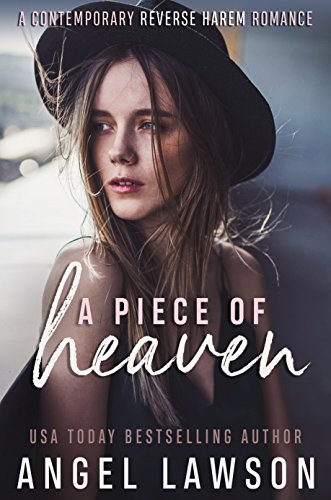
Six Questions: Interview with Angel Lawson, author of A Piece of Heaven

Morning, everyone! It’s been a while, so here’s an interview with Angel Lawson. Angel is the author of A Piece of Heaven, a YA book which deals with a few issues I haven’t delved into a ton: Online bullying and self-harm.

First, here’s the book description:

No good deed goes unpunished.

I learned that lesson the hard way when I agreed to helping my friend Justin with a favor.

My platonic friend Justin.

A favor that helped him with his reputation but turned mine into the trending topic at my school. In a matter of days I go from quiet, nobody to school slut.

The problem with that? I’m still a virgin.

The whispers, the stares and the constant gossip could bring me down but I’m tired of hiding in the dark, covering up my anxiety and being alone. I decide to take on the bullies and find a few surprising allies along the way; the Allendale Four.

Oliver, Anderson, Jackson and Hayden make up this tight-knit circle of friends and they make it their mission to protect my reputation, my heart and my soul.

For the first time I’m not alone and I’m not afraid, but will the closed-minded town of Allendale accept our relationship?

Please note a Piece of Heaven is a contemporary young adult, Why Choose novel that deals first love, the hardships of high school; including the topics of bullying, social issues and self-harm.

This isn’t the type of book which you would normally associate with mental health – it deals with romance and part of the genre is apparently reverse harem (I have never heard of that one!). But, I’d also argue that it is non-traditional books which can best make the most impact in terms of mental health.

Anyways, here’s Six Questions with Angel Lawson.

It’s rare to find someone who hasn’t had some sort of personal experience with bullying. Was this you, and how did those experiences inform your writing?

As a kid I was honestly more part of the “mean girl” group than outside of it, but that didn’t mean we were in the clear. Basically, we were mean because you had to keep the attention off of yourself, because anyone could be a target. Once I moved on to high school I was able to make new friends and leave that group behind. The interesting result as an adult (with two teenage daughters) is that I can smell a bully a mile a way. They don’t always see it, but I do. The manipulation and jockeying for power (which is all bully is.) My oldest came home from school last week having not done well on a test. Her “friend” who is very smart and does very well academically, pulled out her phone and took a picture of her grade. Just because. It’s a power move–something to make my daughter feel unsettled and to doubt herself, all to hide the other persons’s own self-doubts.

Your book also addresses a topic that is much more taboo than it should be: Self-harm. How did you approach this topic, and how were you able to do so in a “safe” way that avoided triggering those who may be tempted to self-harm?

We went through a family crisis last year with my youngest. The combination of some issues at school, her general anxiety and bad side effects of medication triggered an awful reaction. We spent months on high alert and getting back in step. Before that I wrote more action-oriented, paranormal or fantasy themed novels. That personal event pushed me into exploring this topic more. It was helpful for me to have somewhere to just lay it all out there, while still telling a fictional story. I tried very hard to be authentic and not sensational.

Mental heath seems to be a theme of yours – in this book and others. How are you able to write about this subject with authenticity?

I have a degree in social work and experience with Juvenile Delinquents (who all have some kind of mental health component) Then first hand experience with therapists, group treatment etc…

What sort of research do you do?

Not much other than what I have been involved in personally.

Your book deals specifically with cyber bullying. Can you talk a little about the impacts which you have seen cyberbullying have on mental health?

I have two teenaged girls. They were not allowed on social media until the 8th grade. I felt like the majority of bad decisions come from being too young to understand long term consequences. So while my older daughter’s friends were all being called into the office for bullying accusations she wasn’t involved. My younger is still not allowed to have Snapchat although i did encourage Instagram to keep in touch with family and friends because she changed schools. The fake accounts are rampant for middle schoolers in particular. The photos and questions and videos basically begging (or literally begging) for attention are out of control. These kids post too much and then don’t get the feedback they want and it’s painful. Frankly, they’re almost ASKING to be bullied which is even worse. They can’t see how it affects their self-esteem and their future and how people view them. It’s complicated. Tricky. The best bet is to stay clear–ALTHOUGH removing yourself entirely can be social suicide as well.

From a mental health perspective, what do you hope your readers get out of the book?

That just because you go through something like this doesn’t mean your life is over. Help is out there and you can have bad moments in a life that don’t have to define you. It’s also a romance and I want people to know that even with flaws you can find love. I really hate the movie 13 Reason’s Why. It offers no hope. It’s sensationalized. The adults are idiots. The kids are relentless. The best moment was when I bumped that book out of the #1 spot for over a month.

When discussing suicide: Sharing stories of hope and recovery

I talked a lot last week about the CDC Technical Packet I read on suicide, and I have one more item in it that I want to discuss.

There’s a section in the packet (“Lessen Harms and Prevent Future Risk”) which applies to anyone who has ever walked down the dark path of suicidal ideation – or even suicide attempts – and come back. Under the approaches subheading, the report says:

Safe reporting and messaging about suicide. The manner in which information on a recent suicide is communicated to the public (e.g., school assemblies, mass media, social media) can heighten the risk of suicide among vulnerable individuals and can inadvertently contribute to suicide contagion. Reports that are inclusive of suicide prevention messages, stories of hope and resilience [italics added by me], risk and protective factors, and links to helping resources (e.g., hotline), and that avoid sensationalizing events or reducing suicide to one cause, can help reduce the likelihood of suicide contagion.

Later, in the evidence section, the report notes:

Finally, research suggests that not only does reporting on suicide in a negative way (e.g., reporting on suicide myths and repetition) have harmful effects on suicide, but reporting on positive coping skills in the face of adversity can also demonstrate protective effects against suicide. Reports of individual suicidal ideation (not accompanied by reports of suicide or suicide attempts) along with reports describing a “mastery” of a crisis situation where adversities were overcome [italics added by me] was associated with significant decreases in suicide rates in the time period immediately following such reports

So, let’s talk about that for a second, because this is important. Many have discussed suicide, and whenever there is a high profile suicide in the media, reports often discuss specific methods and details. That’s bad.  As the report above clearly demonstrates, the way in which suicide is discussed in society can have an extremely positive or negative affect on impact rates.

And here’s the part which specifically touches all of us who have been there: There’s something potentially life saving about sharing your story.

Describe it. Tell people about your darkness. Tell them how suicide was something you considered. Maybe even attempted. Tell them the truth – be open and honest with your experiences. But don’t just emphasize the sadness. Talk about how you found your way back. Talk about how you fought your demons, and thanks to X, Y and Z, are now in recovery. You don’t have to pretend that everything is perfect – in that, that likely won’t ring true. But what I think people can and should say is that they no longer want to end their lives – that they want to live, to fight on, and to lead a good life. This is what I tried to do when I shared my specific story of suicidal ideation in the aftermath of the Anthony Bourdian and Kate Spade suicides.

If you can, I’d encourage you to tell your story, and do so as noted above. I truly believe that doing so can save lives.

How the Center for the Disease Control says we can stop suicide

Yesterday, I wrote a little bit about a really insightful technical package offered by the Centers for Disease Control. It’s a long document, but for those of you who care about how we can stop suicide and are looking for ideas (if you are involved in the government or not!), I think it’s a great read.

I don’t want to get insanely in-depth into what sort of recommendations were contained in the document. But I do think it’s worth reviewing the broad outlines of it, just in case you don’t have time to read a 60 page governmental white paper. Broadly speaking, it broke down it’s recommended solutions into a few categories:

  • Strengthening Economic Supports: This one was the topic of my entry yesterday, and I’d argue the most important for both suicide and protecting vulnerable people in our society. This specifically deals with making sure that people who may be at risk for suicide as a result of economic conditions have access to the services that they need to recover, and includes items like robust unemployment benefits, medical benefits, foreclosure assistance and more.
  • Strengthen Access & Delivery of Suicide Care: Here’s where things start to align with what I think most people would expect. This includes the obvious systemic changes needed to be made to our mental health system, including improvements to the insurance system (parity between physical and mental health), reducing provider shortages (a huge issue of mine which, unfortunately, largely needs to be dealt with at the federal level), and broader changes to the mental health care system in order to better address mental illness and suicide prevention.
  • Create Protective Environments: Here’s where what I’ll call “stop-gap” methods really come into play. This includes means reduction (guns are  huge issue here, but this also includes restricting access to suicide hotspots) and improving organizational/social systems to promote protective environments (particularly in at risk locations) and addressing excess alcohol use (which is connected to suicide).
  • Promoting Connectedness: Thanks to phones and technology, we are more connected than ever before. Except we’re not. And as social connectedness breakdown, suicide rates will continue to increase. This specific approach recommends addressing suicide by establishing peer norm programs and engaging in increased community engagement activities.
  • Teaching Coping & Problem Solving Skills: One of the keys to surviving any bout of mental illness – and I’ve written about it before – is building resilience, or an ability to cope. This includes creating social/emotional learning programs and addressing parenting and family relation skills.
  • Identify and Support People at Risk: This includes training gatekeepers, improving crisis intervention and broad-based treatment for people at risk of suicide.
  • Postvention: The aftermath of a suicide attempt can have a dramatic impact on both the victim and those around them. This section of the report deals with postvention for those who were close with a suicide victim and addresses safe reporting/messaging in the aftermath of a suicide.

This is really comprehensive, and again, worth a read. If you have any thoughts or questions, I’d love to hear them! Leave your questions or comments in the section below.

Here’s the first chapter of Redemption!

Alright, alright, alright!

I had a few folks ask for it without the Email gate, so, here you go. Click here to download the first Chapter of Redemption. If you want to buy the book, here’s the Amazon link, and here’s the page on my website for other formats and how to buy a signed copy from me.

Enjoy!

The next time there’s a high profile suicide, don’t just tweet a phone number. Do this instead.

As part of my legislative work, I just finished reading a technical package from the Centers for Disease Control. The topic was suicide. It was some pretty heavy reading. At the same time, it was informative for many reasons, as it included a wide array of programs that people in government and the non-profit world can enact in order to reduce suicides.

Something, in particular, was highly instructive about the packet. It contained a wide array of information dealing with numerous public policy areas. But let me talk about the first chapter in terms of specific recommendations about suicide reduction. What do you think it was? Was it access to mental health care? The need for more research into better drugs? Controlling access to means of suicide?

Nope. It was economic supports.

Suicide rises in times of economic strife. The connection is clear. So, the first two specific recommendations within the packet:

  • Strengthening household financial security via programs like unemployment benefits, temporary assistance and livable wages.
  • Enacting programs that reduce foreclosure risk.

The report went on to note that ample evidence exists showing that stronger social safety net programs can reduce the risk of suicide.

Other areas of this report also showed the strong demonstration between public policy, public health and reducing suicides rates. Various sectors of our society are critically important as well, of course, but government can be – and should be – a primary actor when it comes to suicide reduction.

Let me go back to the title of this blog entry. Like many others, when there is a high-profile suicide, I’ll tweet out the “thoughts and prayers” line, as well as information on the National Suicide Prevention Hotline. That’s good, and it’s helpful. But it’s not enough. I want to start treating suicide in public the way we treat gun violence. It’s not enough to tweet support. We have to demand action from our policy makers:

Look, I’m a flaming progressive, so this may just be my political orientation, but I think we need more common sense gun reform measures in the worst way – things like red flag laws (which would allow for a temporary removal of weapons from people who are a danger to others or themselves), universal background checks and more. And I’m glad now that, whenever we have yet another tragic shooting, it’s not just “thoughts and prayers” but “thoughts, prayers and CAN WE PLEASE ACTUALLY DO SOMETHING ABOUT THIS.”

I want to take this mantra and apply it to mental health and suicides. Let’s stop pretending that suicides are a problem of an individual or their family. They aren’t. They are a societal, communial and governmental problem. We need to do more at the societal level to address mental health and suicide, and that means doing more than just working to improve mental health. If we can acknowledge that, we can make a change.

So, I say to you, dear reader: Don’t just tweet the suicide hotline numbers. Demand that policy makers make the changes necessary to save lives.