The Redemption Audiobook is Here!

Hey, folks! Gonna have to make this quick, but here’s a cool thing to share: Redemption is now available as an audio book! If you, like me, have had a harder time reading during this pandemic (I don’t know about you, but I just cannot concentrate lately!), then here is the perfect way to read by listening.

I hope you’re all safe and well – we’ll be back next week with more!

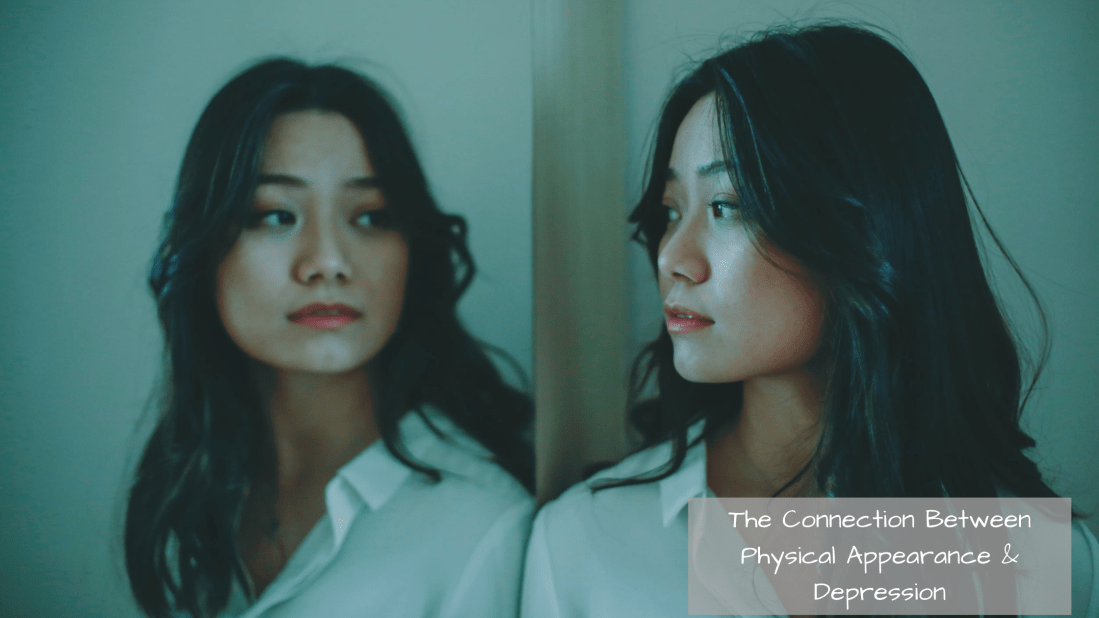
The Connection Between Physical Appearance & Depression

I caught a post on Reddit and it got me thinking about the broader connections between physical appearance – well, really, more like self-perceived physical appearance – and depression. The results, as you can probably imagine, are not particularly pretty.

First, the study in question. A new survey shows that there is a strong correlation between rates of depression and perceived physical appearance. According to the study, 61% of people suffer from some form of body dissatisfaction. Strikingly, a study found that body dissatisfaction at the age of 14 was related to increased risk of depression as a teenager gets older. Those risks varied, but could increase depression risks by 50% – 285%. Interestingly enough, the severity of the depression was higher in women than in men, somewhat counterintuitively. The study does not that increasing body satisfaction can potentially reduce depression in teenagers.

As usual, standard disclaimer: Correlation does not equal causation, and it is very difficult to determine whether or not the body dissatisfaction causes the depression, if the reverse is true, or if there is another factor that makes these levels of depression and body dissatisfaction occur.

However, this obviously isn’t the first piece of research that makes a direction connection between body dissatisfaction and depression, and many other studies have made this connection in the past.

So, what do we do here? Of course, increasing body satisfaction is an obvious solution, but…good luck with that. I still sort of hate the way I look and I’m 37. I mean, really. How many people like the way they look?

I’m starting to veer into an area that I’ve done in the past, but again, I’d point out that this is yet another example of broader cultural connections making a big input on our mental state. Indeed, I would love to see more research on this topic. The above study, for example, took place in the United Kingdom. Other studies, like this one from Singapore, have made similar findings. This begs the question: How severe is this connection in America? Given the cultural and financial value we tend to place on issues of looks in America, I’d bet that the connections are very strong. But…what about countries that don’t culturally emphasize physical appearance the way that we do? Do they have the same level of connection between body satisfaction and depression?

I’d bet no. And if I’m right about that guess, this is even further proof: Issues of mental illness simply cannot be separated from broader cultural and societal priorities.

Is your job causing your depression? Here’s a way to find out

All of us know what it is like to have work-related stress, to have issues falling asleep because of work, or to have those periods where you just can’t bear the thought of going into the office. Thankfully, generally speaking, these are temporary periods that fade.

But, what if it’s something more?

Allow me to introduce you to what might be the most depression survey you’ve heard of in a while: The Occupational Depression Inventory, a tool designed to help, “quantify the severity of work-attributed depressive symptoms and establish provisional diagnoses of job-ascribed depression.”

Sigh.

A new survey about the ODI claims that it, “showed strong reliability and high factorial validity.” This means that it can reliably determine if someone is showing depressive symptoms as a result of workplace issues. It consists of ten statements, such as, “My work was so stressful that I could not enjoy the things that I usually like doing” and “My experience at work made me feel like a failure.” Survey takers are supposed to rate their agreement with the statements on a scale of 0-3, with 0 meaning never or almost never and 3 meaning nearly every day. A higher score means more of a chance that your work is responsible for causing your depression.

So, what do you do if you score high? Learn to cope?

Gah. I mean, look, the fact that this tool exists, and that there is enough of a demand for it, shows that we might be at a point in society where we need to reexamine our priorities. Obviously I get the need for it, and it makes perfect sense. But, as I’ve said time and time again on this blog, we have to remember that societal facets are often a huge factor in causing depression, and I worry that this is something we have lost sight of. 

I don’t mean this as a knock on the ODI or the people who developed it. It is clear there is a need for such a survey, and perhaps this survey can help people make more positive psychological changes to their lives. But what it doesn’t address is what happen when someone is at a job because they have zero financial choice and no other skills. It doesn’t deal with the fact that our society safety net, job retraining options and educational systems are all woefully inadequate. It doesn’t address the non-stop financial pressure that we all feel in order to provide for our kids, our parents, ourselves, our debt…nada. And this is why so many people stay at dead end jobs, get depressed and then take a survey like the ODI. 

For the millionth time, as a society, we have to make a choice. If we want to reduce depression, for real, we have to reduce the causes of depression, and that is often financial stress and the non-stop fear of what happens if someone loses employment. There is so, so much more to depression than mental health! This is more proof of the truth behind that statement.